MARINO PH
Your Maritime Digital Hub

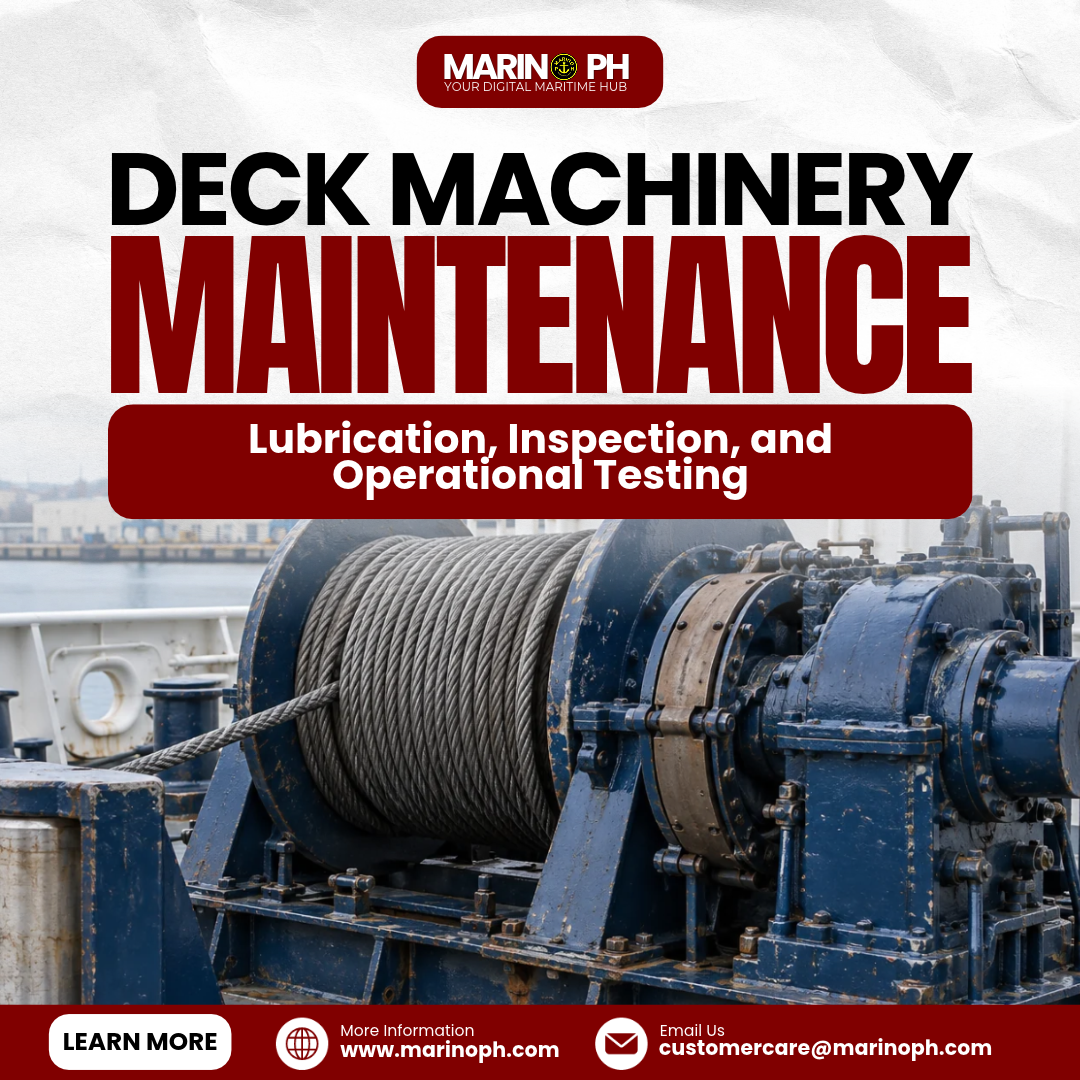
Deck machinery maintenance is essential for ensuring the safe, reliable, and efficient operation of equipment such as windlasses, mooring winches, cranes, capstans, and hydraulic systems. Regular maintenance helps prevent equipment failure, reduce operational risks, and extend machinery service life.
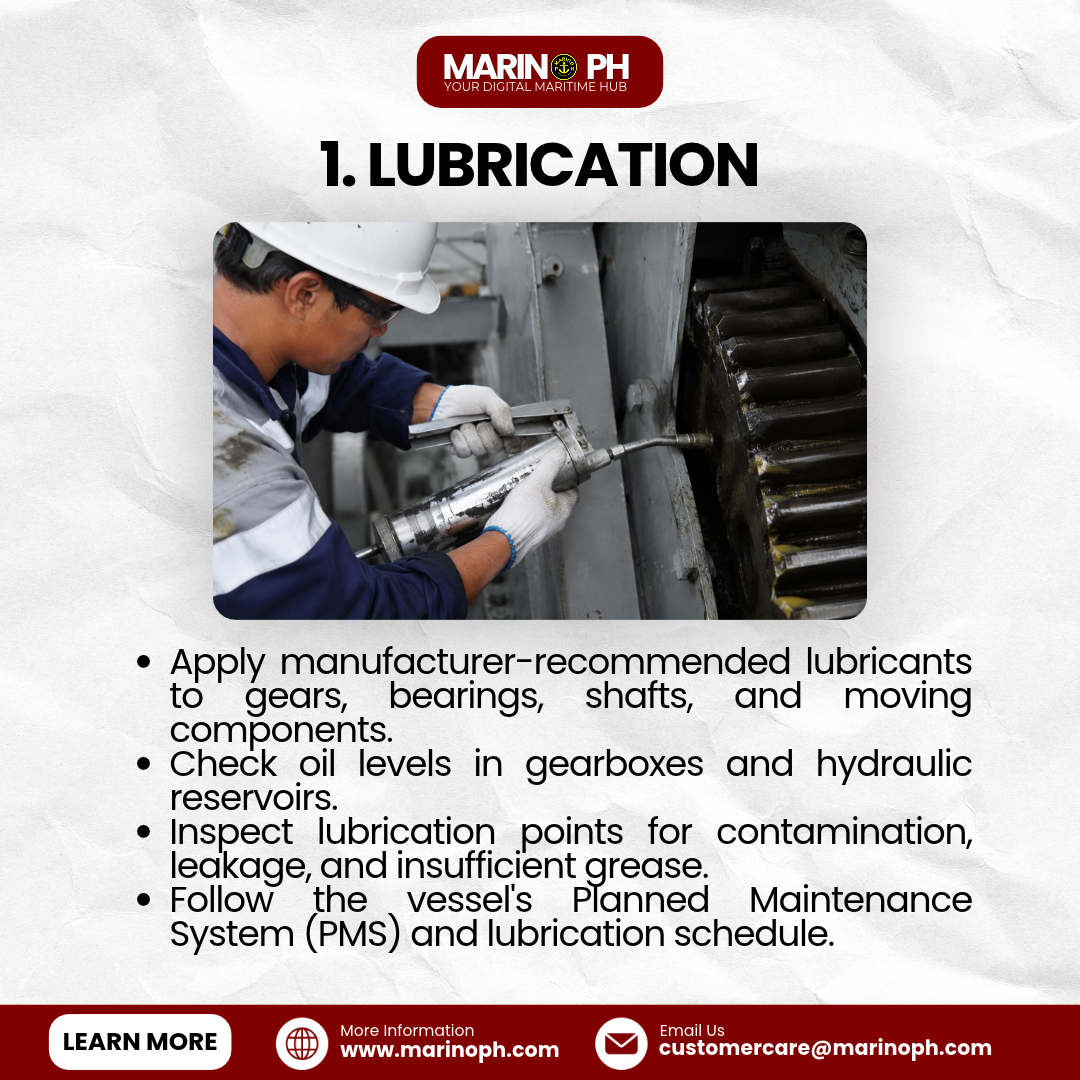
1. Lubrication
- Apply manufacturer-recommended lubricants to gears, bearings, shafts, and moving components.
- Check oil levels in gearboxes and hydraulic reservoirs.
- Inspect lubrication points for contamination, leakage, and insufficient grease.
- Follow the vessel\'s Planned Maintenance System (PMS) and lubrication schedule.
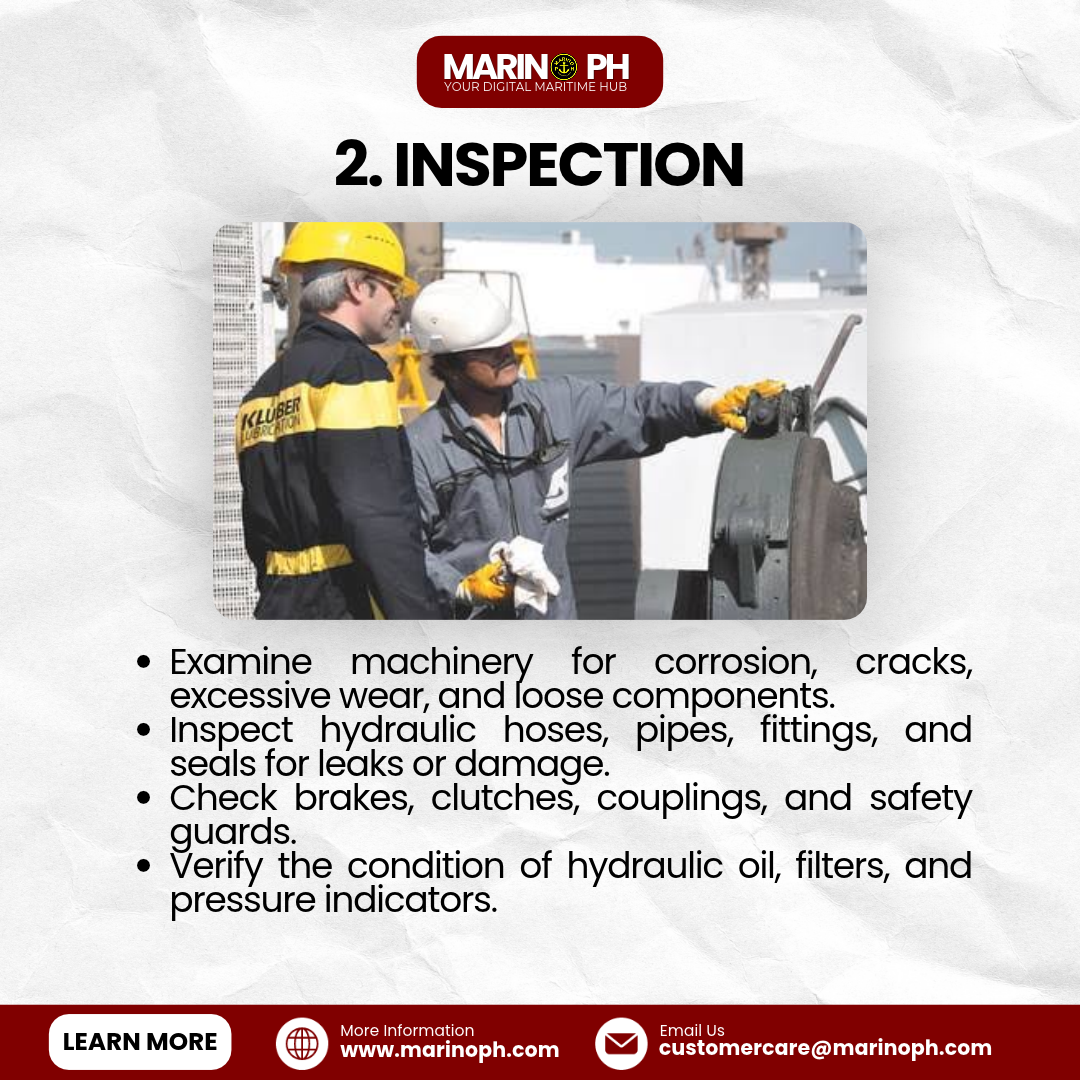
2. Inspection
- Examine machinery for corrosion, cracks, excessive wear, and loose components.
- Inspect hydraulic hoses, pipes, fittings, and seals for leaks or damage.
- Check brakes, clutches, couplings, and safety guards.
- Verify the condition of hydraulic oil, filters, and pressure indicators.
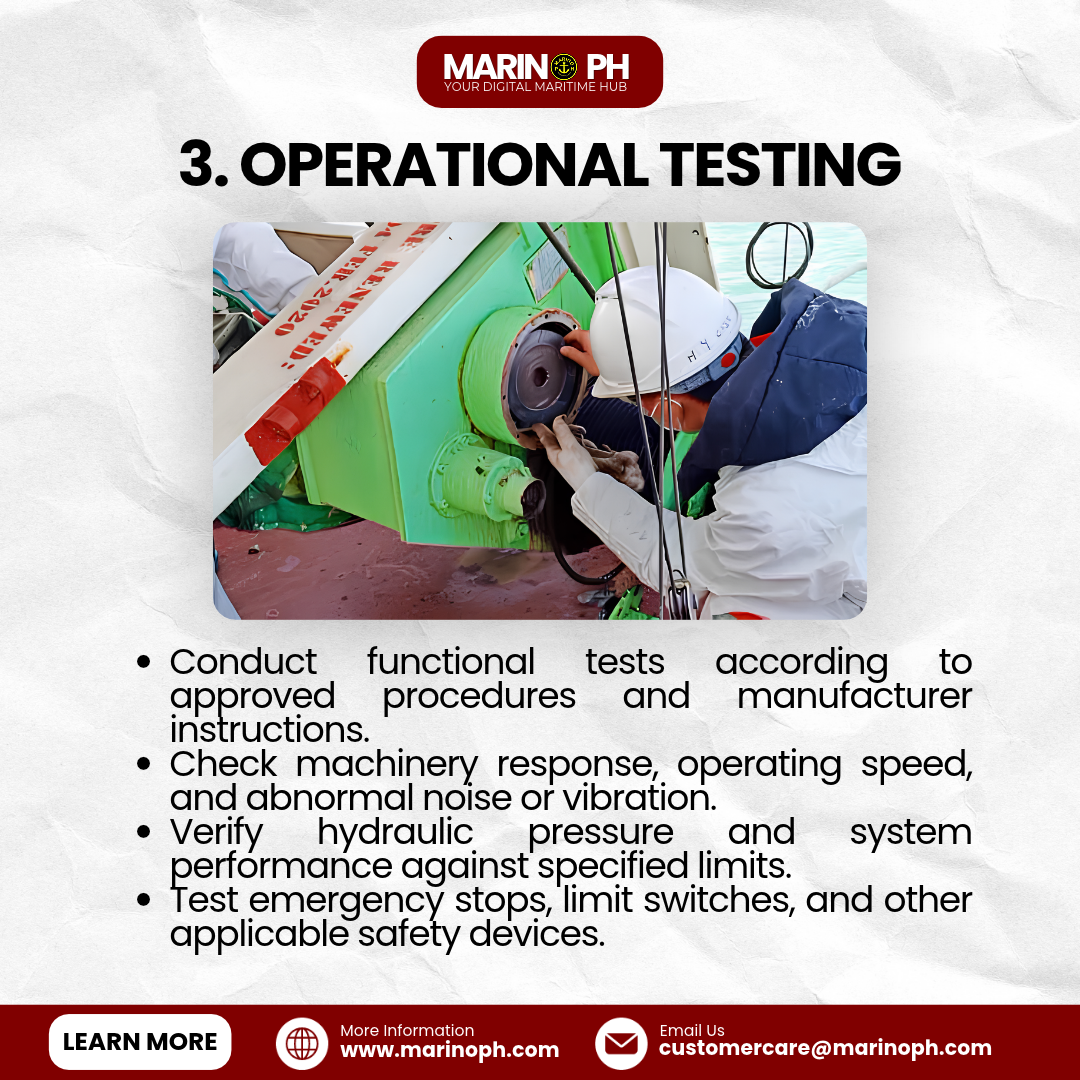
3. Operational Testing
- Conduct functional tests according to approved procedures and manufacturer instructions.
- Check machinery response, operating speed, and abnormal noise or vibration.
- Verify hydraulic pressure and system performance against specified limits.
- Test emergency stops, limit switches, and other applicable safety devices.
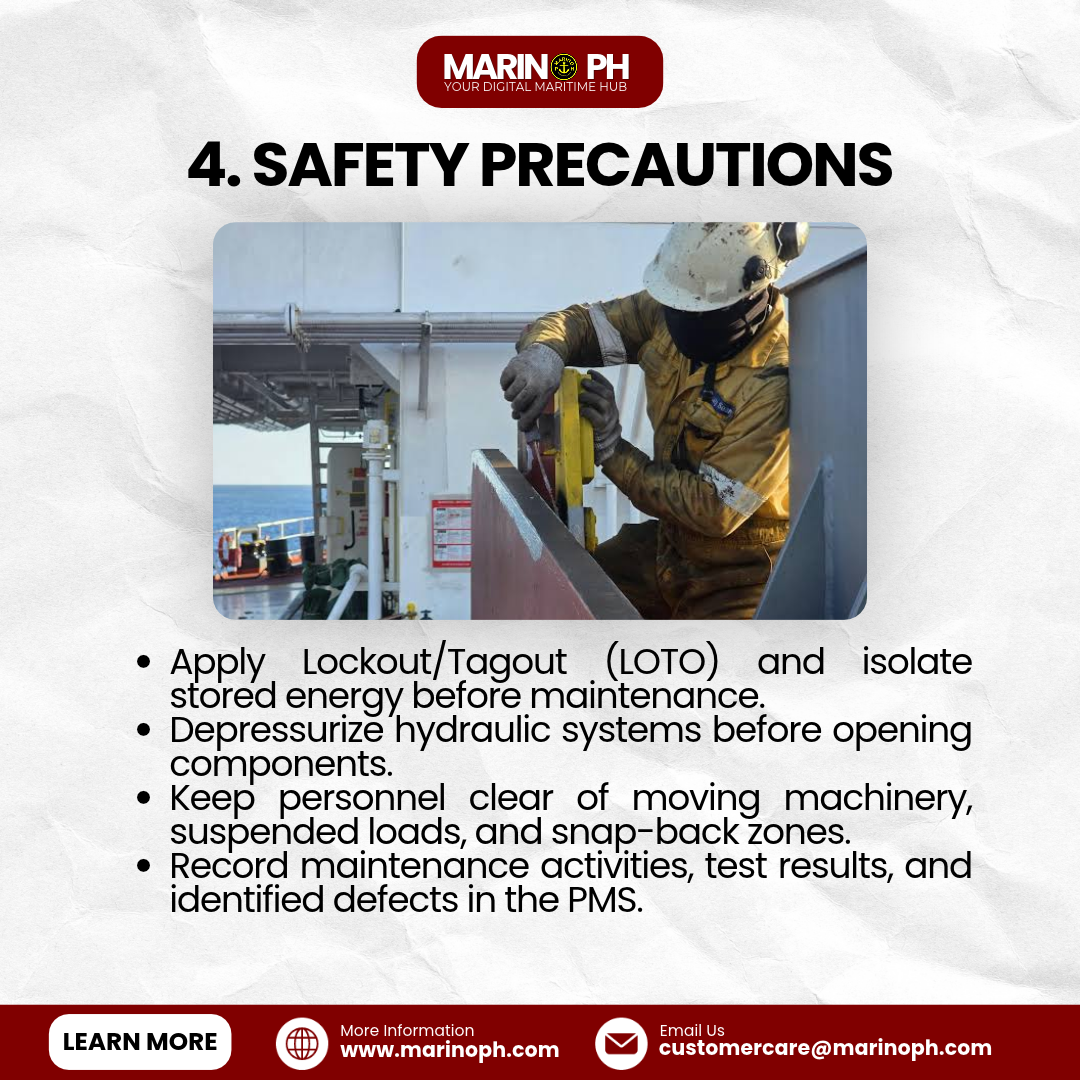
4. Safety Precautions
- Apply Lockout/Tagout (LOTO) and isolate stored energy before maintenance.
- Depressurize hydraulic systems before opening components.
- Keep personnel clear of moving machinery, suspended loads, and snap-back zones.
- Record maintenance activities, test results, and identified defects in the PMS.

Key Reminder: Proper lubrication, systematic inspection, and regular operational testing help maintain deck machinery reliability, protect crew members, and support safe shipboard operations.
