MARINO PH
Your Maritime Digital Hub

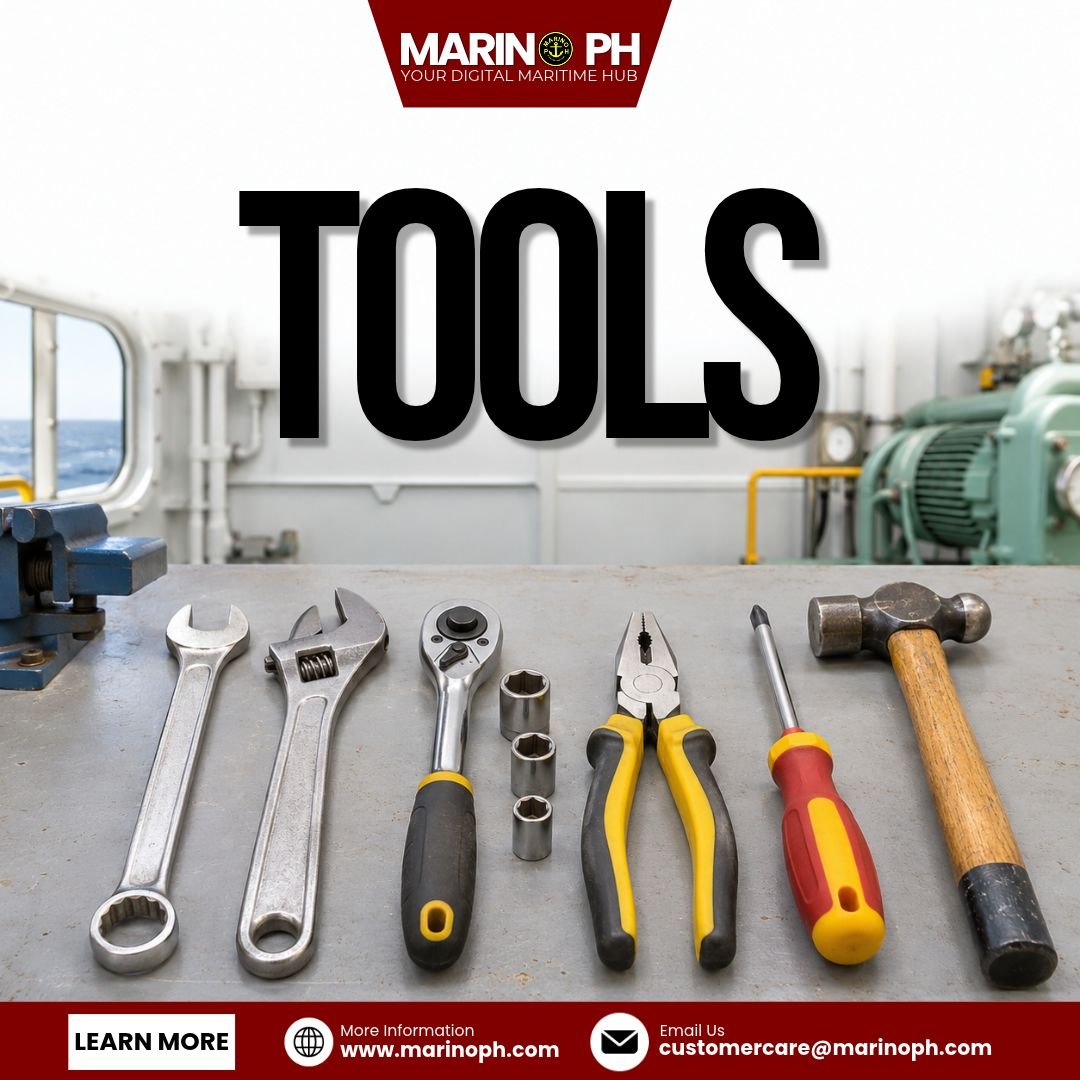
Marine engineers and engine ratings use hand tools and measuring instruments to inspect, service, and repair shipboard machinery. Each tool has a specific purpose, from loosening pump casing bolts to checking shaft diameter or measuring a clearance. Choosing the correct tool helps protect fasteners and components from damage and improves the accuracy of maintenance work. These common tools are used when working on pumps, valves, compressors, and other auxiliary machinery in a ship’s engine room.

MEASURING TOOLS
Measuring tools are instruments used to check dimensions, clearances, and small movements. In a ship’s engine room, crew members use them to check shaft diameters, valve clearances, and shaft runout, then compare the readings with the manufacturer’s specified limits.
HIGH COOLING WATER TEMPERATURE
The alarm activates when engine coolant temperature exceeds its set point. It warns of overheating, which can result from reduced coolant circulation or inadequate heat removal.
HIGH BILGE LEVEL
The alarm activates when liquid in a monitored bilge well reaches the sensor’s alarm level. The cause could be a leak or water ingress.
FIRE ALARM
A ship’s fire alarm is a continuous bell or horn lasting at least ten seconds. Triggered by detectors or manual call points, it alerts the crew to muster at fire stations.
CO₂ PRE-DISCHARGE ALARM
A CO₂ pre-discharge alarm is an audible and visual warning that activates before carbon dioxide fire suppression gas is released into a protected space. Because CO₂ displaces oxygen and can cause asphyxiation, the alarm gives people time to evacuate safely before the gas floods the area.
