MARINO PH
Your Maritime Digital Hub

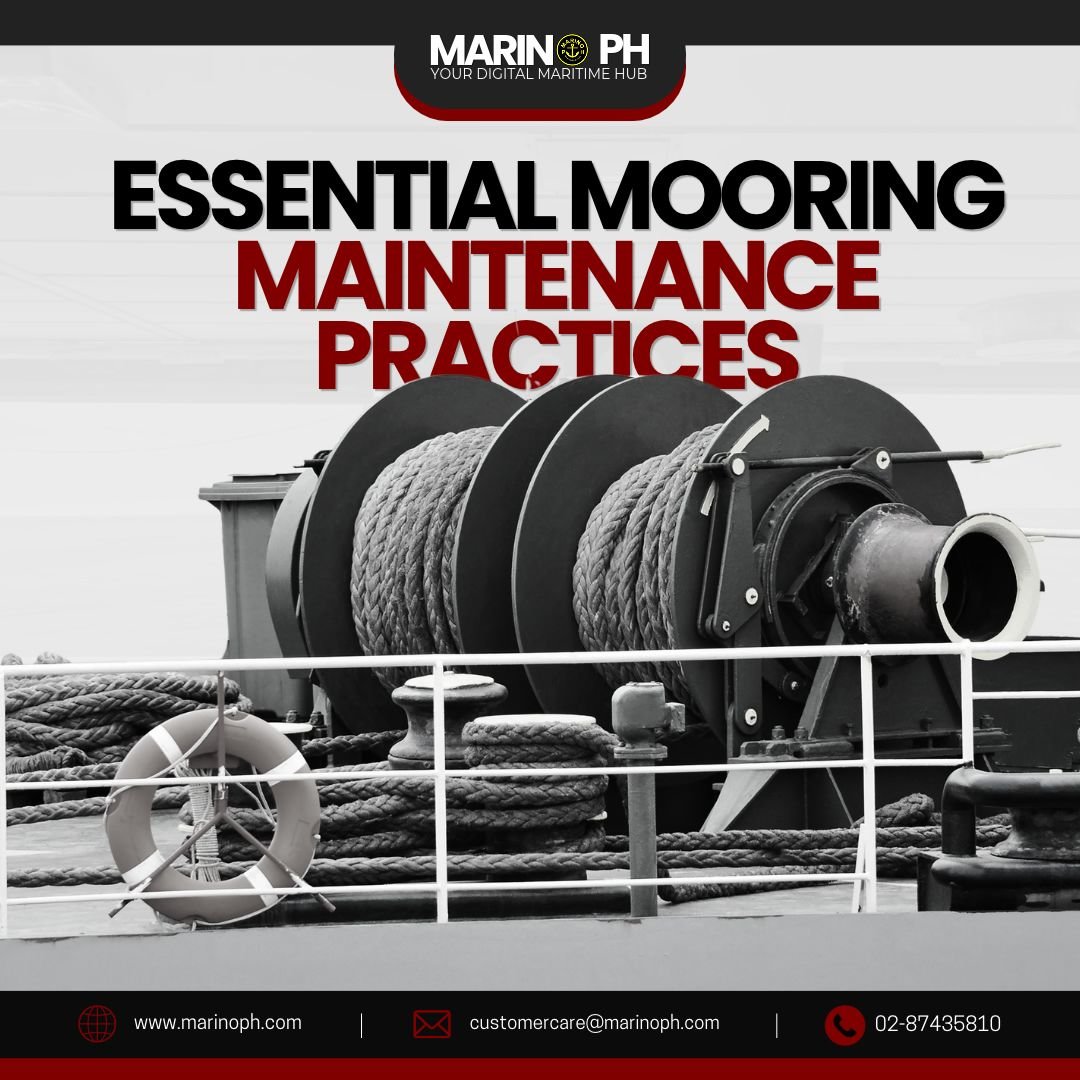
Proper maintenance of mooring equipment is essential for safe and efficient shipboard operations. Regular inspections, preventive maintenance, and timely repairs help reduce equipment failures, prevent accidents, and protect seafarers during mooring and unmooring operations. Every vessel should follow its established maintenance procedures, line management plan, and manufacturer\'s recommendations.
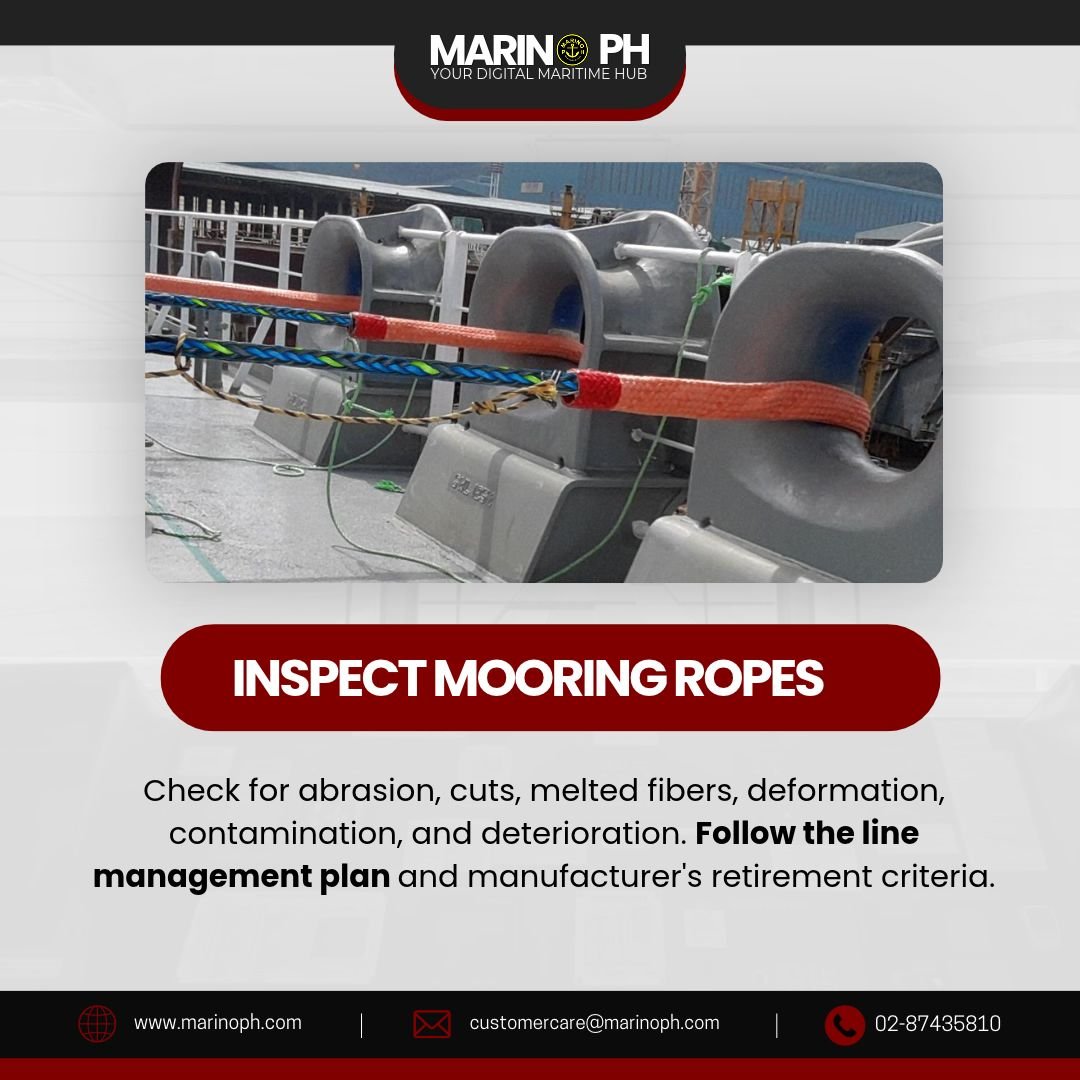
1. Inspect Mooring Ropes
Check for abrasion, cuts, melted fibers, deformation, contamination, and deterioration. Follow the line management plan and manufacturer\'s retirement criteria.
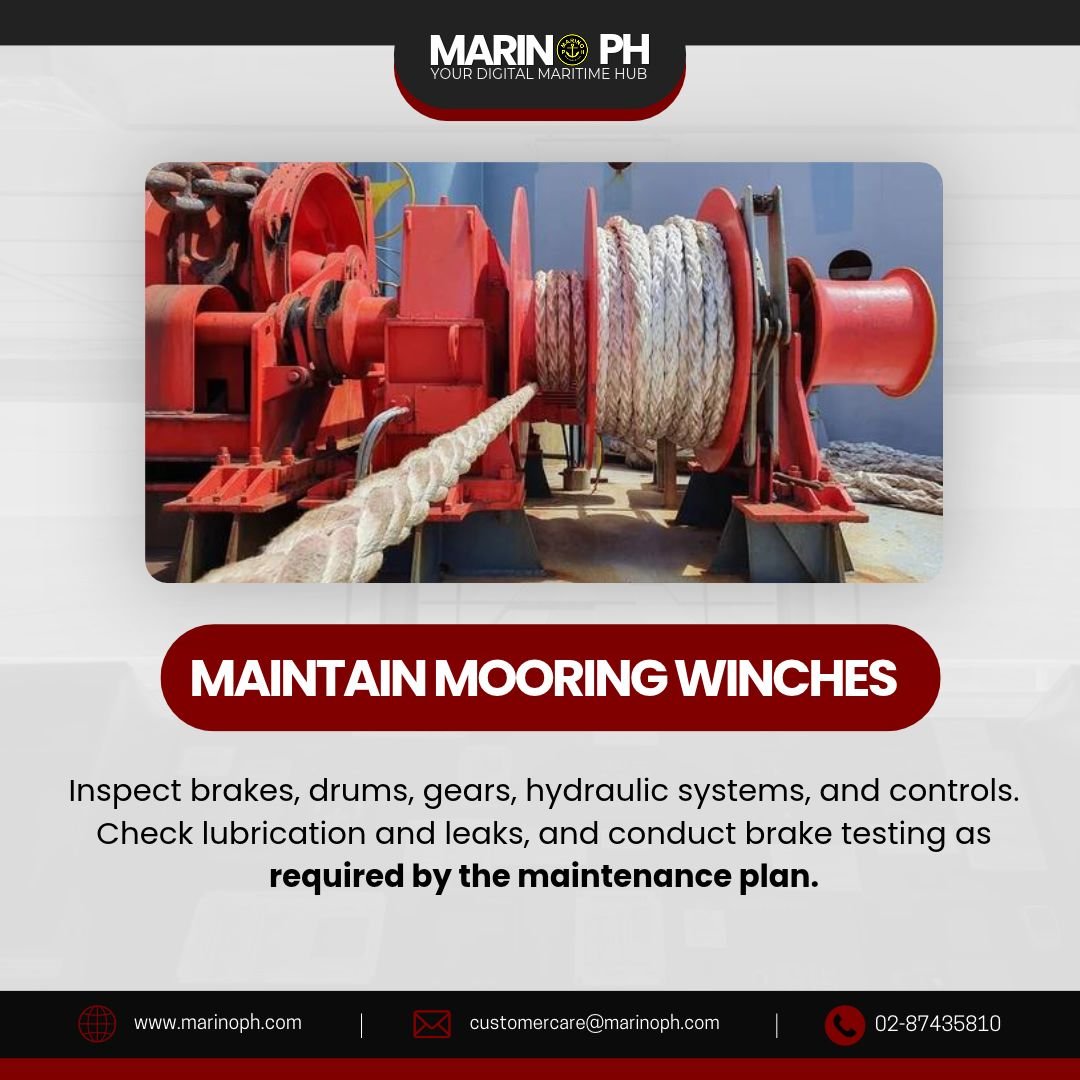
2. Maintain Mooring Winches
Inspect brakes, drums, gears, hydraulic systems, and controls. Check lubrication and leaks, and conduct brake testing as required by the maintenance plan.
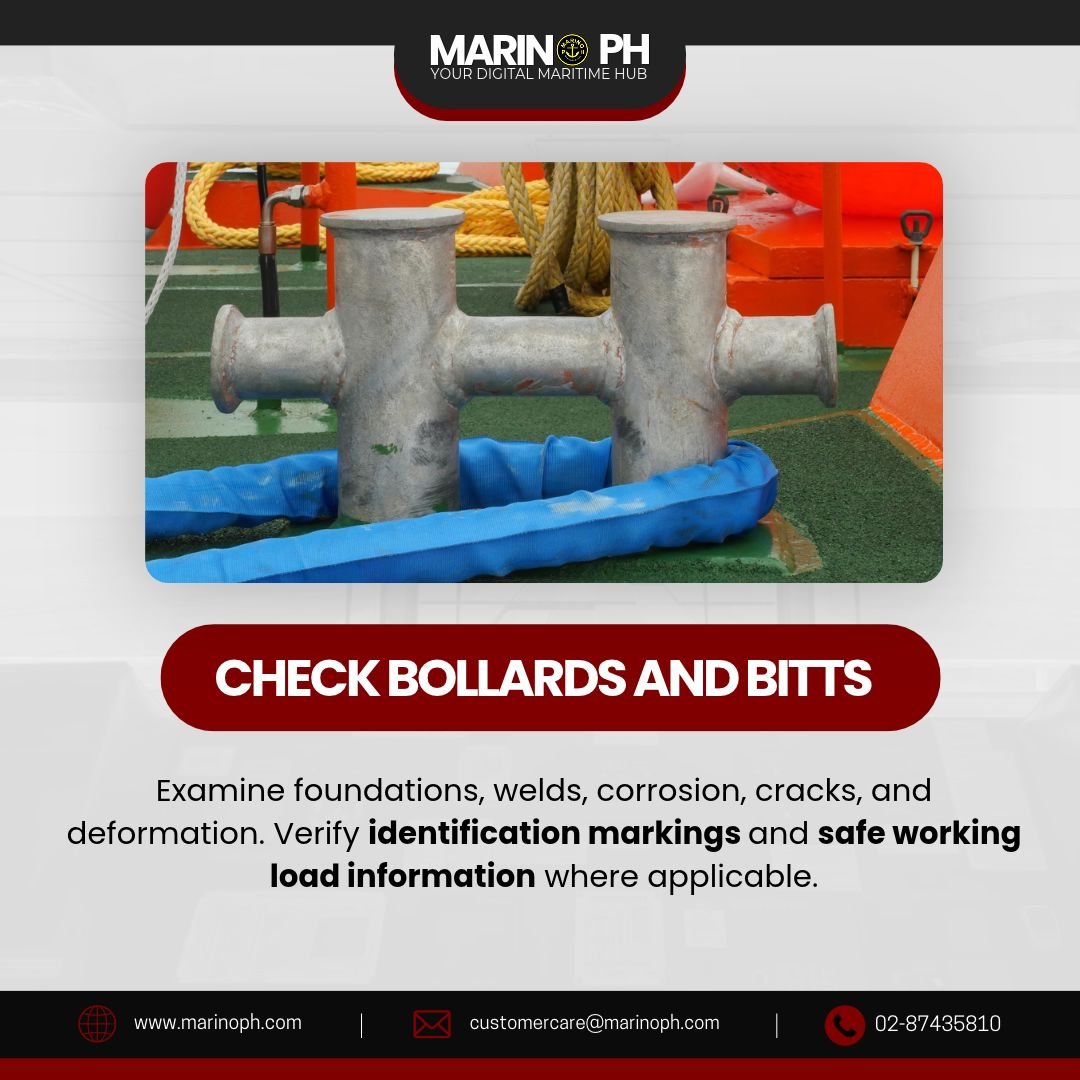
3. Check Bollards and Bitts
Examine foundations, welds, corrosion, cracks, and deformation. Verify identification markings and safe working load information where applicable.
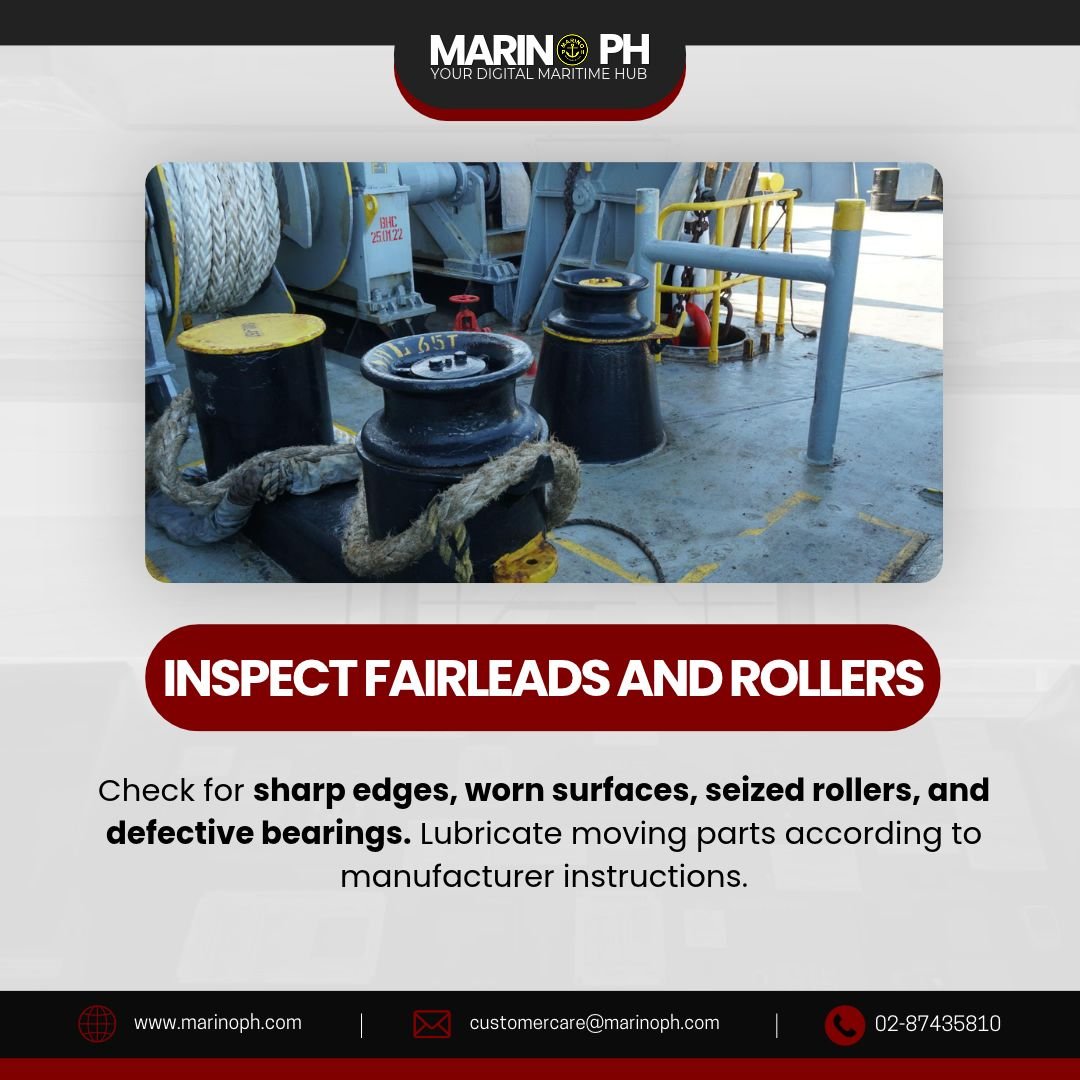
4. Inspect Fairleads and Rollers
Check for sharp edges, worn surfaces, seized rollers, and defective bearings. Lubricate moving parts according to manufacturer instructions.
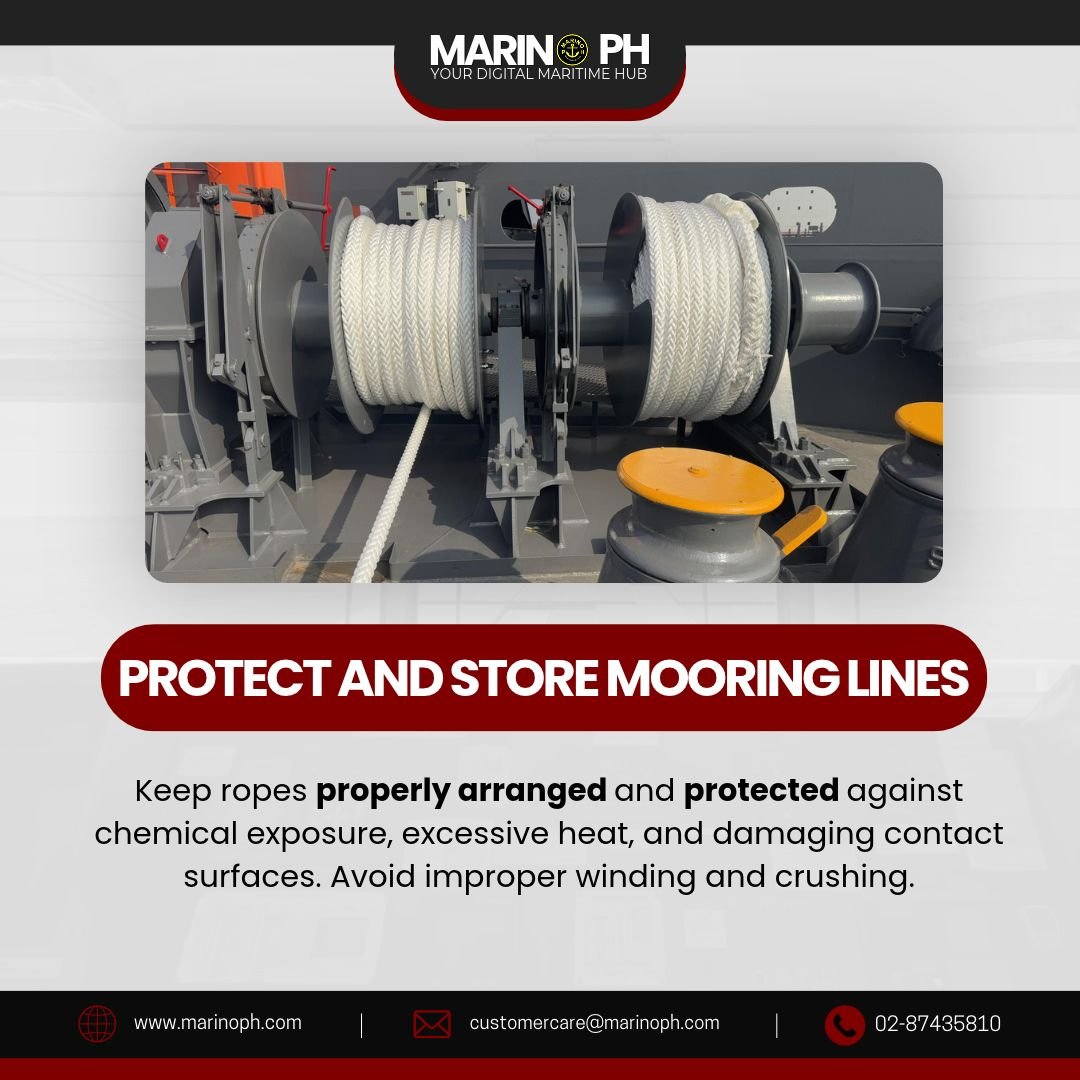
5. Protect and Store Mooring Lines
Keep ropes properly arranged and protected against chemical exposure, excessive heat, and damaging contact surfaces. Avoid improper winding and crushing.
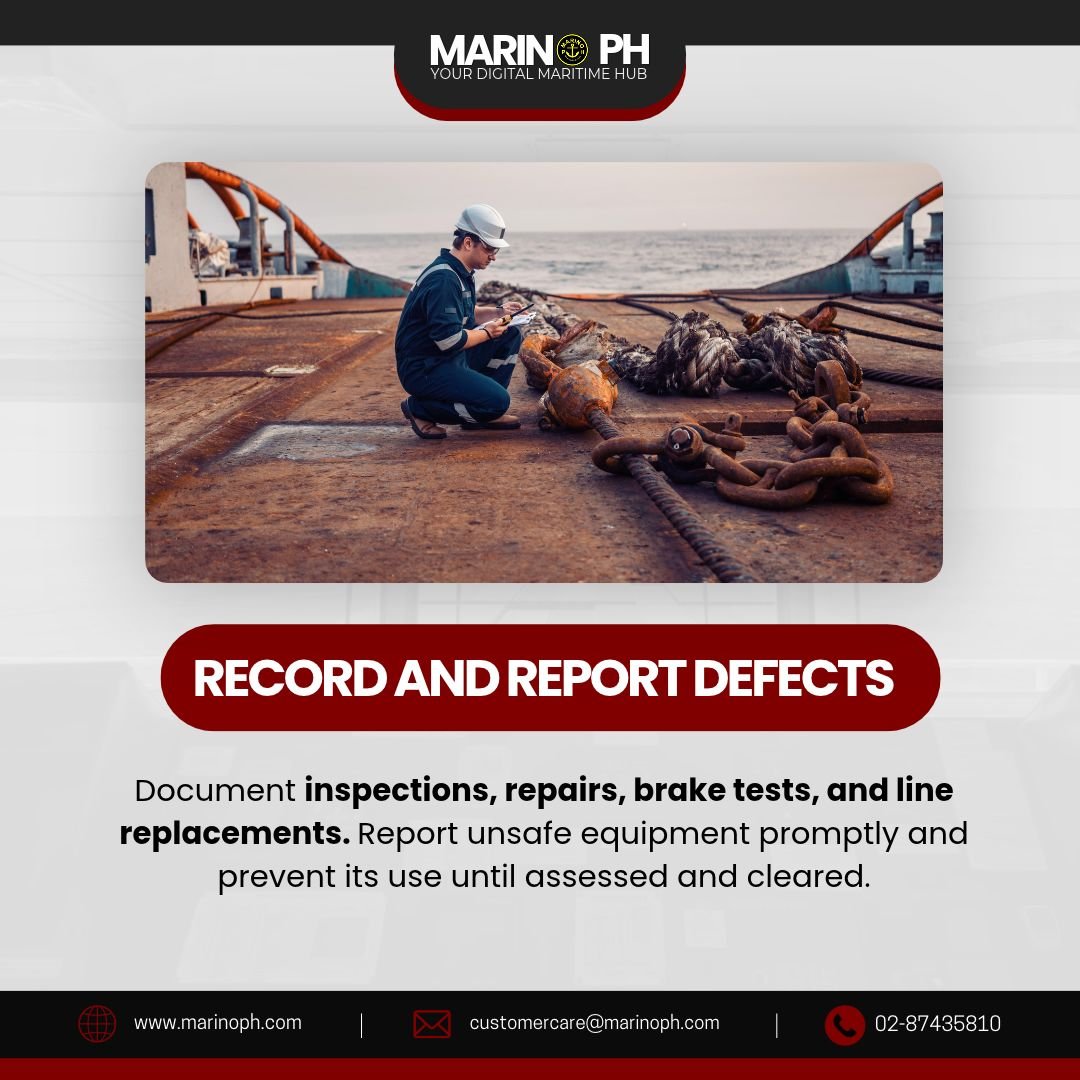
6. Record and Report Defects
Document inspections, repairs, brake tests, and line replacements. Report unsafe equipment promptly and prevent its use until assessed and cleared.

Conclusion
Effective mooring maintenance goes beyond routine equipment checks. It requires consistent inspections, proper documentation, timely corrective action, and strict adherence to established safety procedures. Well-maintained mooring equipment reduces operational risks and helps prevent serious injuries caused by equipment failure or line failure.
Safe mooring begins with proper maintenance, but it also depends on competent personnel, effective communication, and awareness of snap-back hazards. Every inspection and maintenance activity contributes to safer operations and better protection for everyone on board.
