
MARINO PH
Your Maritime Digital Hub


An allotment is a portion of a seafarer’s monthly salary remitted by the employer to the seafarer’s designated beneficiary, known as the allottee, in the Philippines.
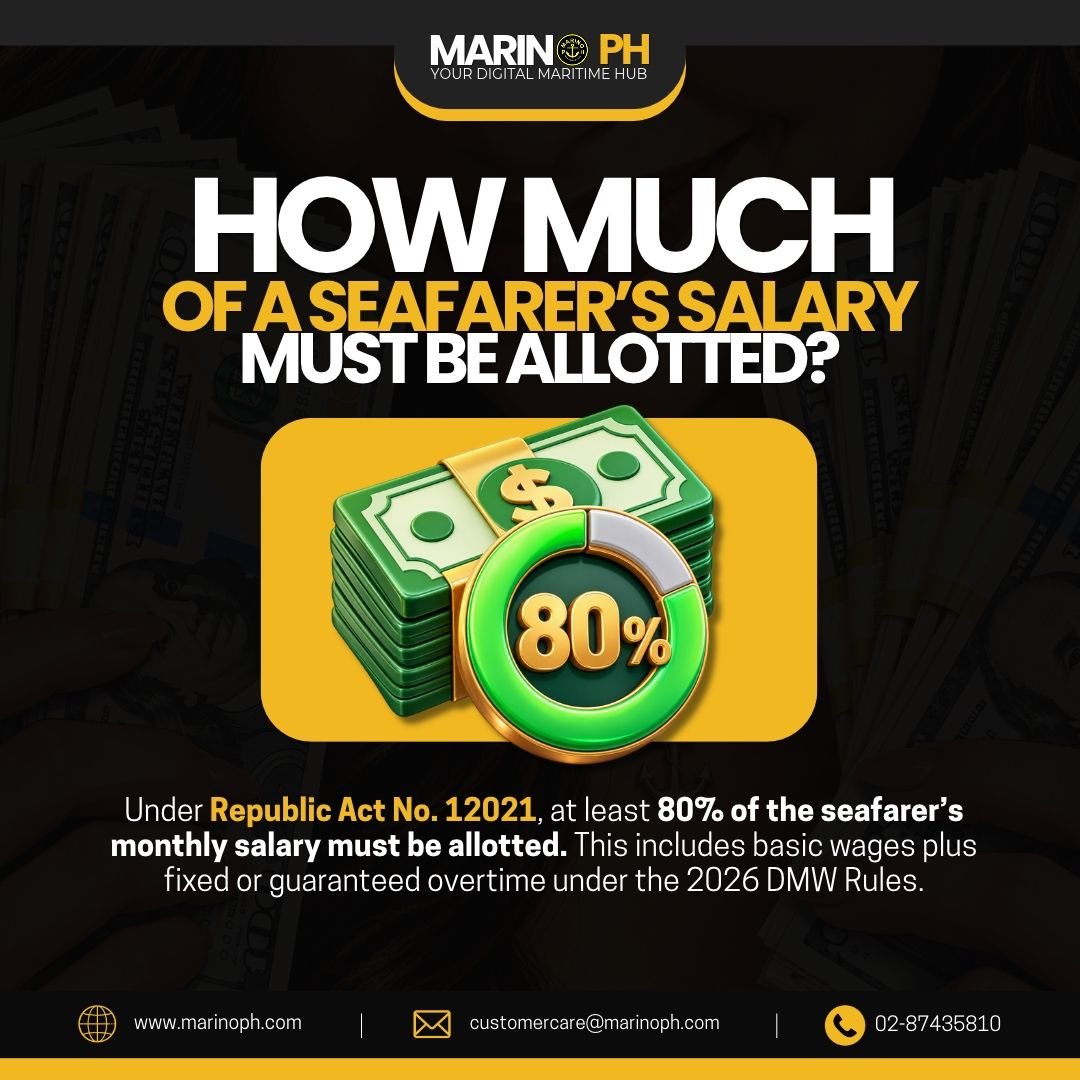
How Much of a Seafarer’s Salary Must Be Allotted?
Under Republic Act No. 12021, at least 80% of the seafarer’s monthly salary must be allotted. This includes basic wages plus fixed or guaranteed overtime under the 2026 DMW Rules.

Is the 80% Allotment Mandatory?
Yes. Philippine law requires Filipino seafarers covered by its provisions to make a monthly allotment of at least 80% of their salary.

Who Can Receive a Seafarer’s Allotment?
The seafarer designates the allottee or allottees who will receive the remittance in the Philippines, subject to applicable documentation and procedures.
Can a Seafarer Change Their Allottee?
Yes, subject to the applicable employment contract and company procedures. The seafarer should submit the required written authorization and updated banking information.

When Should the Allotment Be Released?
Allotments must be paid at least once a month to the designated allottee through an authorized Philippine bank.
Can a Seafarer Allot More Than 80% of Their Salary?
Yes. The employer may provide facilities for remitting additional earnings beyond the required allotment, subject to applicable arrangements.

Can the Company Charge Fees for Processing the Allotment?
No. The employer must provide the required allotment remittance facilities without expense to the seafarer.

What Exchange Rate Applies to the Allotment?
The allotment must be paid in Philippine pesos using the exchange rate at the time of remittance, as indicated in the authorized Philippine bank’s credit advice.
What Should a Seafarer Do if the Allotment Is Delayed or Missing?
Contact the employer or licensed manning agency, request payment details, and retain supporting records. Unresolved complaints may be referred to the Department of Migrant Workers (DMW).

Conclusion
A seafarer’s allotment plays an important role in providing financial support to families in the Philippines. Seafarers should understand their rights, ensure accurate and timely payments, and maintain updated beneficiary information to protect their earnings and support their loved ones.
