
MARINO PH
Your Maritime Digital Hub

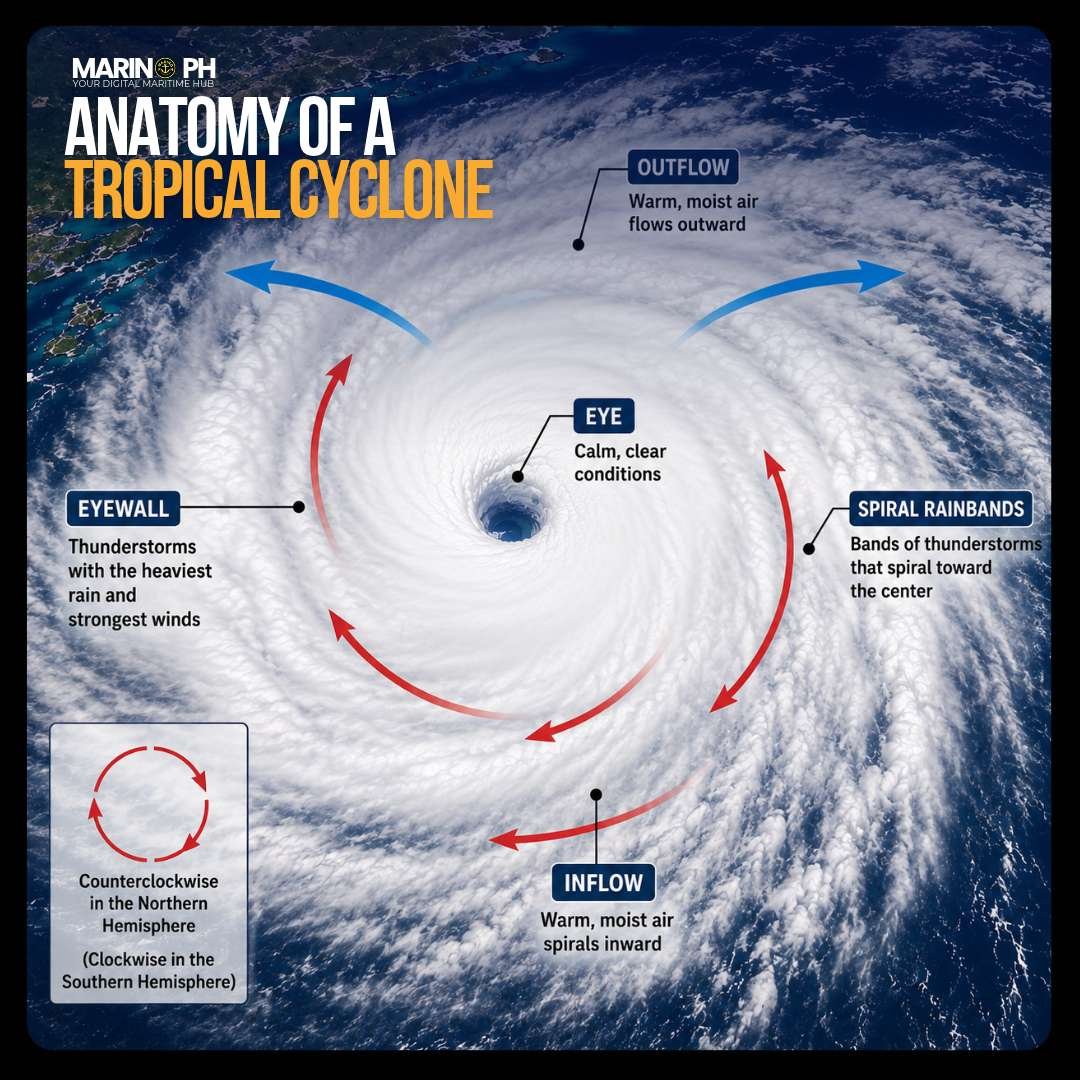
A tropical cyclone is a powerful rotating weather system that develops over warm ocean waters. Its main features include the eye, eyewall, spiral rainbands, inflow, and outflow. The eye is generally calm, while the surrounding eyewall produces the strongest winds and heaviest rainfall. Spiral rainbands extend outward, bringing thunderstorms and gusty winds across a wide area.

Tropical cyclones rotate counterclockwise in the Northern Hemisphere and clockwise in the Southern Hemisphere due to the Coriolis effect. Warm, moist air flows inward near the ocean surface, rises through thunderstorms, and spreads outward at higher altitudes. Understanding these characteristics is essential for seafarers, particularly in voyage planning, weather monitoring, and safe navigation during severe weather conditions.
