MARINO PH
Your Maritime Digital Hub

Proper weight distribution is essential to ship stability. Even when the total weight remains the same, its location onboard can change the vessel’s center of gravity, trim, list, and stability. Correct cargo placement and weight management help maintain adequate stability, reduce excessive stresses, and ensure safer vessel operations at sea.
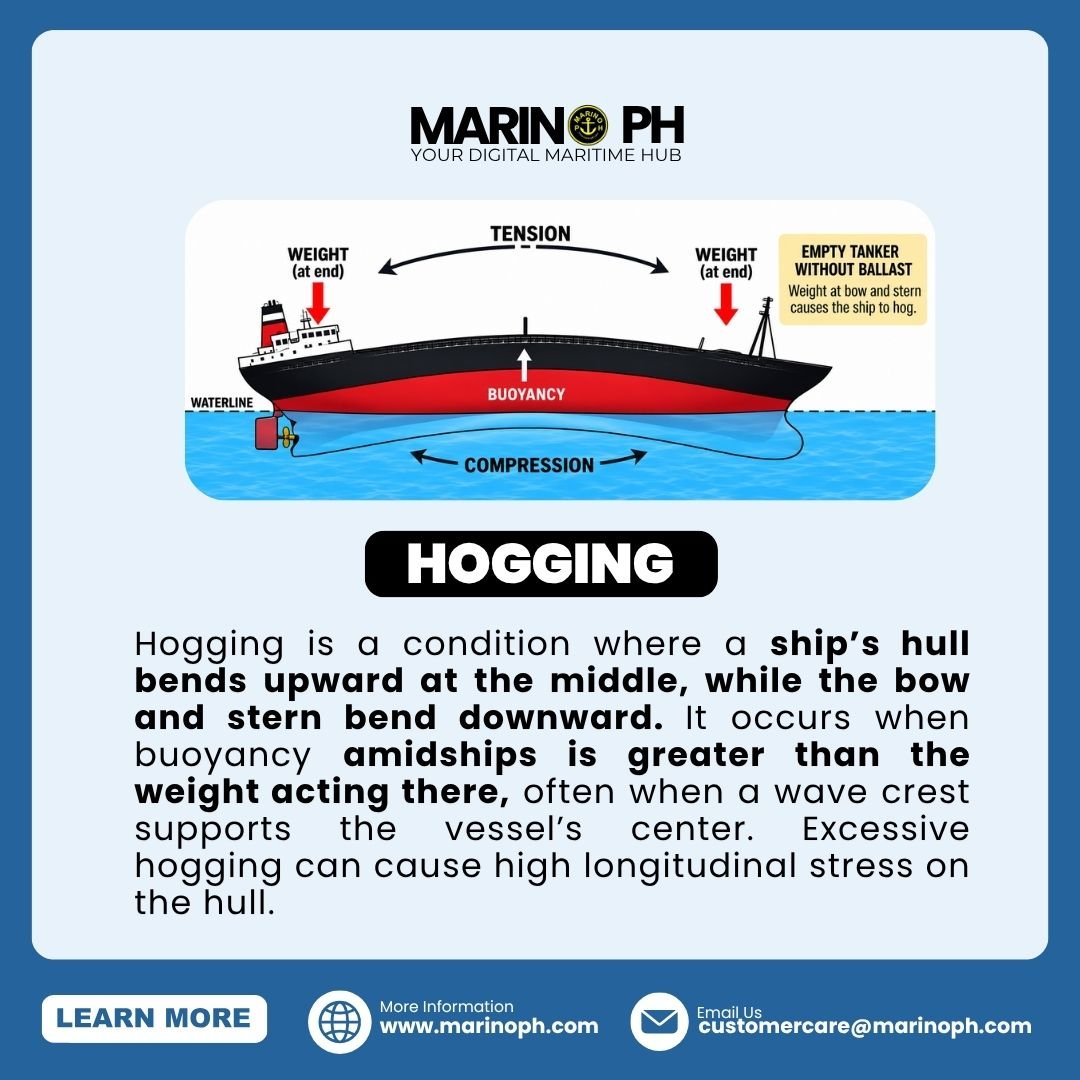
Hogging is a condition where a ship’s hull bends upward at the middle, while the bow and stern bend downward. It occurs when buoyancy amidships is greater than the weight acting there, often when a wave crest supports the vessel’s center. Excessive hogging can cause high longitudinal stress on the hull.
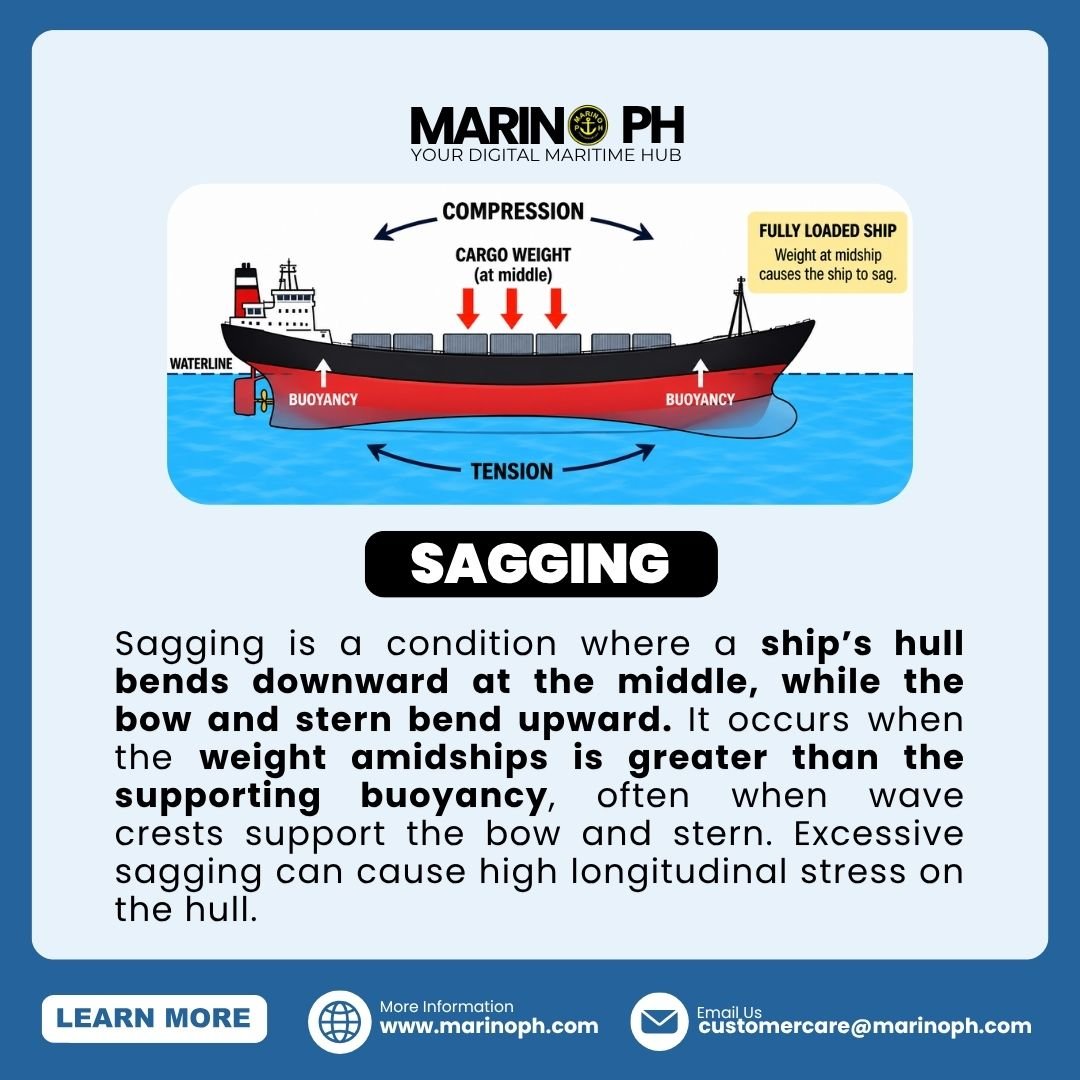
Sagging is a condition where a ship’s hull bends downward at the middle, while the bow and stern bend upward. It occurs when the weight amidships is greater than the supporting buoyancy, often when wave crests support the bow and stern. Excessive sagging can cause high longitudinal stress on the hull.

The Difference of Hogging and Sagging Hogging and sagging are types of longitudinal bending stress on a ship’s hull. Hogging occurs when the ship bends upward at the middle, usually with a wave crest amidships. Sagging occurs when the ship bends downward at the middle, usually with a wave trough amidships. Both can cause structural stress.
