MARINO PH
Your Maritime Digital Hub

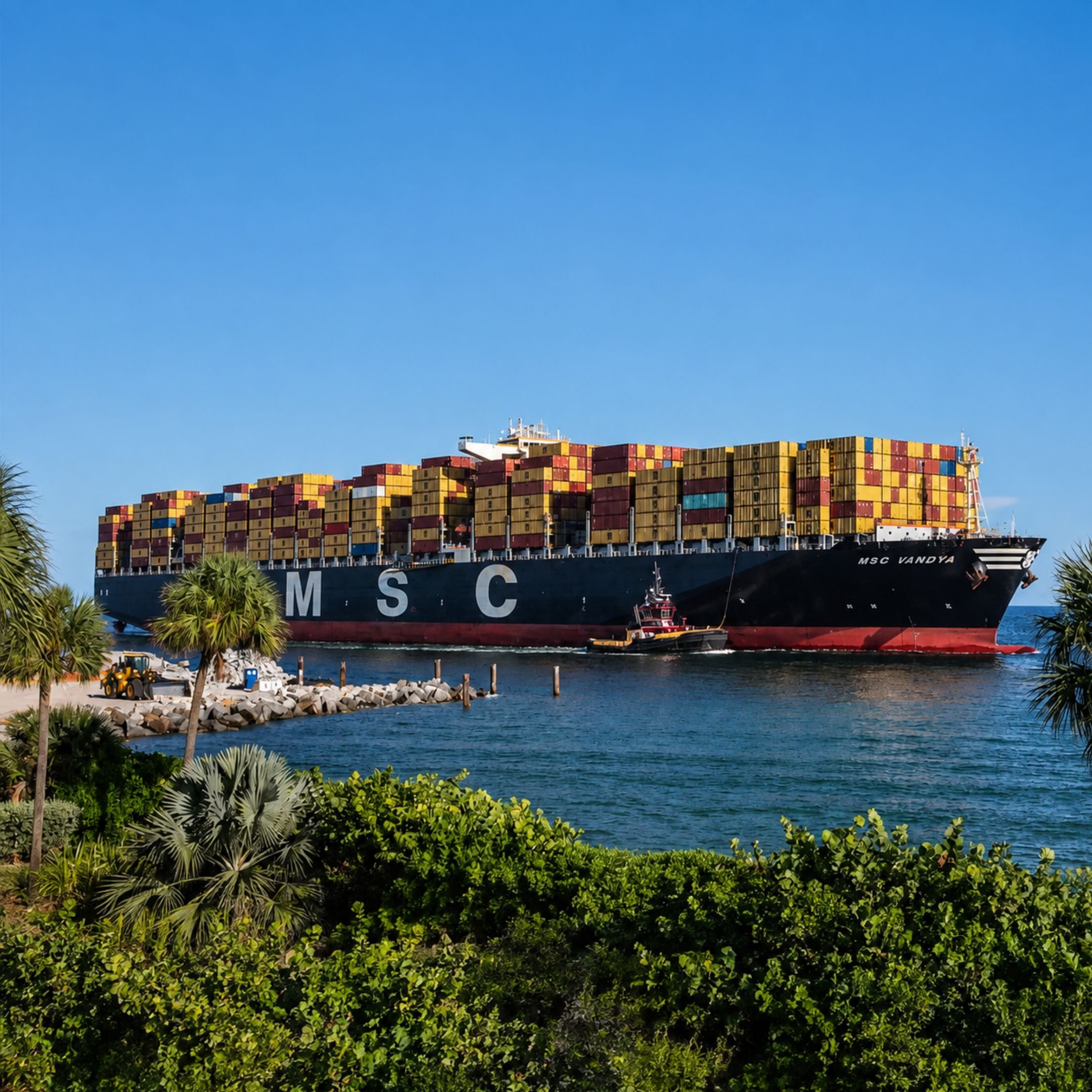
Photo Credit: The Maritime Executive
Port Everglades in Florida has renewed attention on plans to improve its navigation channels following the arrival of MSC Vandya, the largest containership to call at the port to date. The vessel’s visit marked a significant milestone for the port as it works to accommodate increasingly larger ships engaged in international container trade.
The 182,000-dwt MSC Vandya measures approximately 1,200 feet in length and has a maximum capacity of about 13,050 TEUs. During its August 12 call, approximately 1,300 TEUs were expected to be discharged, while additional containers were loaded for the vessel’s onward voyage to Asia as part of MSC’s Dragon Service.

ADVERTISEMENT
Port officials said the vessel’s arrival also highlighted limitations associated with the port’s existing channel depth. While large containerships can access Port Everglades, current depth restrictions may limit the amount of cargo they can carry when entering the port, potentially requiring vessels to operate below their maximum carrying capacity.
Port Everglades handled a record 1,167,552 TEUs in fiscal year 2025, reflecting continued growth in its container operations. However, port officials said existing channel conditions effectively limit inbound vessels to approximately 8,000 TEUs, creating operational constraints as shipping companies increasingly deploy larger containerships on international routes.
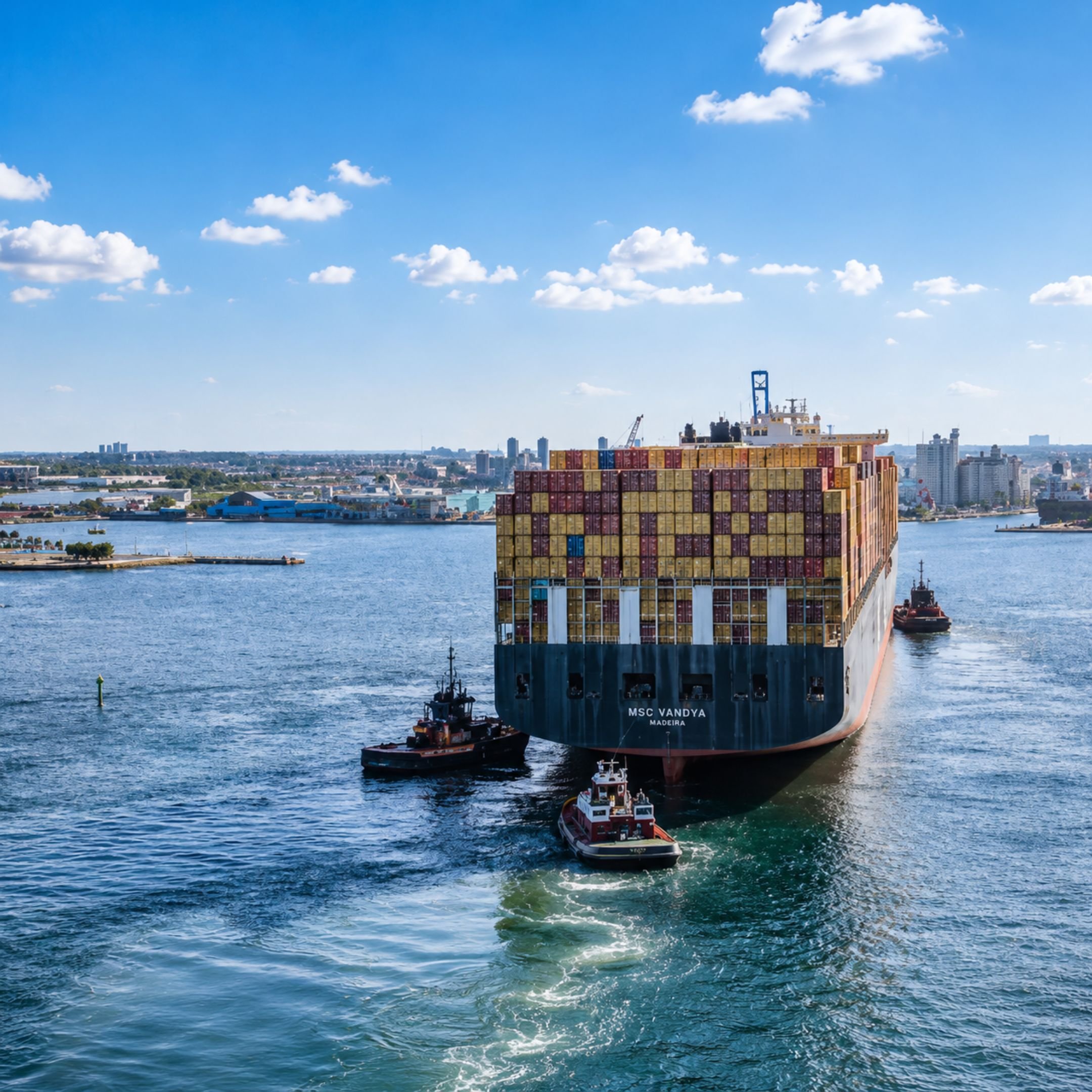
Photo Credit: Port Everglades
The Port Everglades Navigation Improvements Project proposes deepening the main navigation channel from 42 feet to 48 feet, with an additional two feet of allowable overdepth. The project also includes widening a section of the Intracoastal Waterway near the U.S. Coast Guard Station to improve vessel movements and address an existing navigational chokepoint.
Port Everglades continues to coordinate with federal and state partners to advance the project. Port officials view the proposed improvements as a long-term infrastructure investment that could provide safer and more efficient access for larger vessels, support future cargo growth, and strengthen the port’s role in South Florida’s international trade and maritime supply chain.
