MARINO PH
Your Maritime Digital Hub

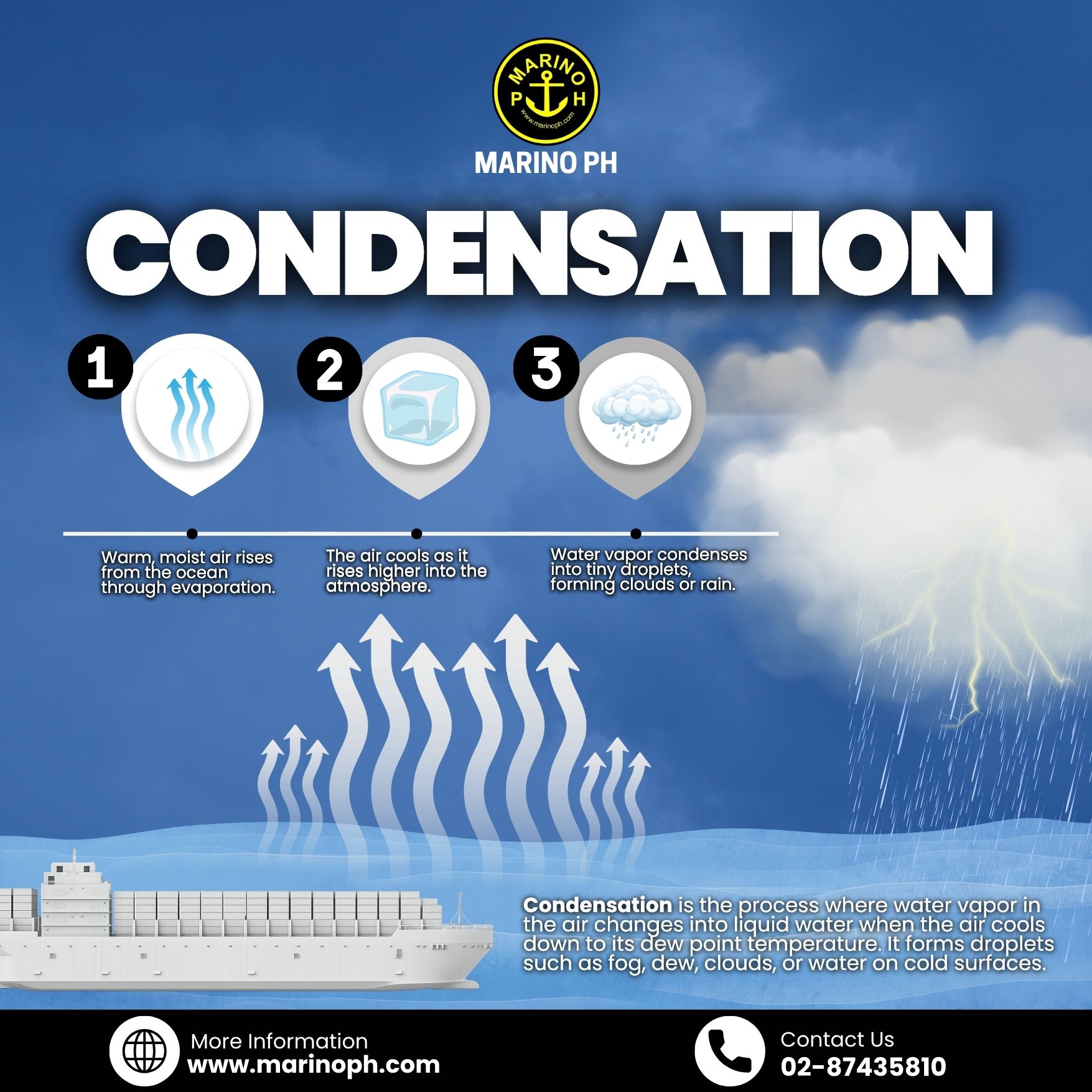
Condensation happens when warm air containing water vapor cools down and changes into liquid water droplets. This process usually takes place when moist air comes into contact with a cooler surface or when warm air rises into the atmosphere and loses heat. As the air temperature reaches its dew point, the water vapor turns into tiny droplets that can form clouds, fog, dew, or even rain.
In the maritime environment, condensation is very common due to the constant presence of moisture, changing temperatures, and sea conditions. Seafarers may notice condensation on bridge windows, accommodation walls, cargo holds, pipelines, and machinery spaces. If not properly controlled, it can lead to slippery surfaces, corrosion, mold growth, damaged cargo, and reduced visibility onboard.

ADVERTISEMENT
Weather conditions such as fog and cloud formation are also connected to condensation. Warm, moist air rising from the ocean cools at higher altitudes, causing clouds and possible rainfall to develop. Understanding condensation is important for both navigation and ship maintenance because it affects safety, cargo protection, and equipment performance onboard vessels operating in different climates and sea temperatures.
