
MARINO PH
Your Maritime Digital Hub

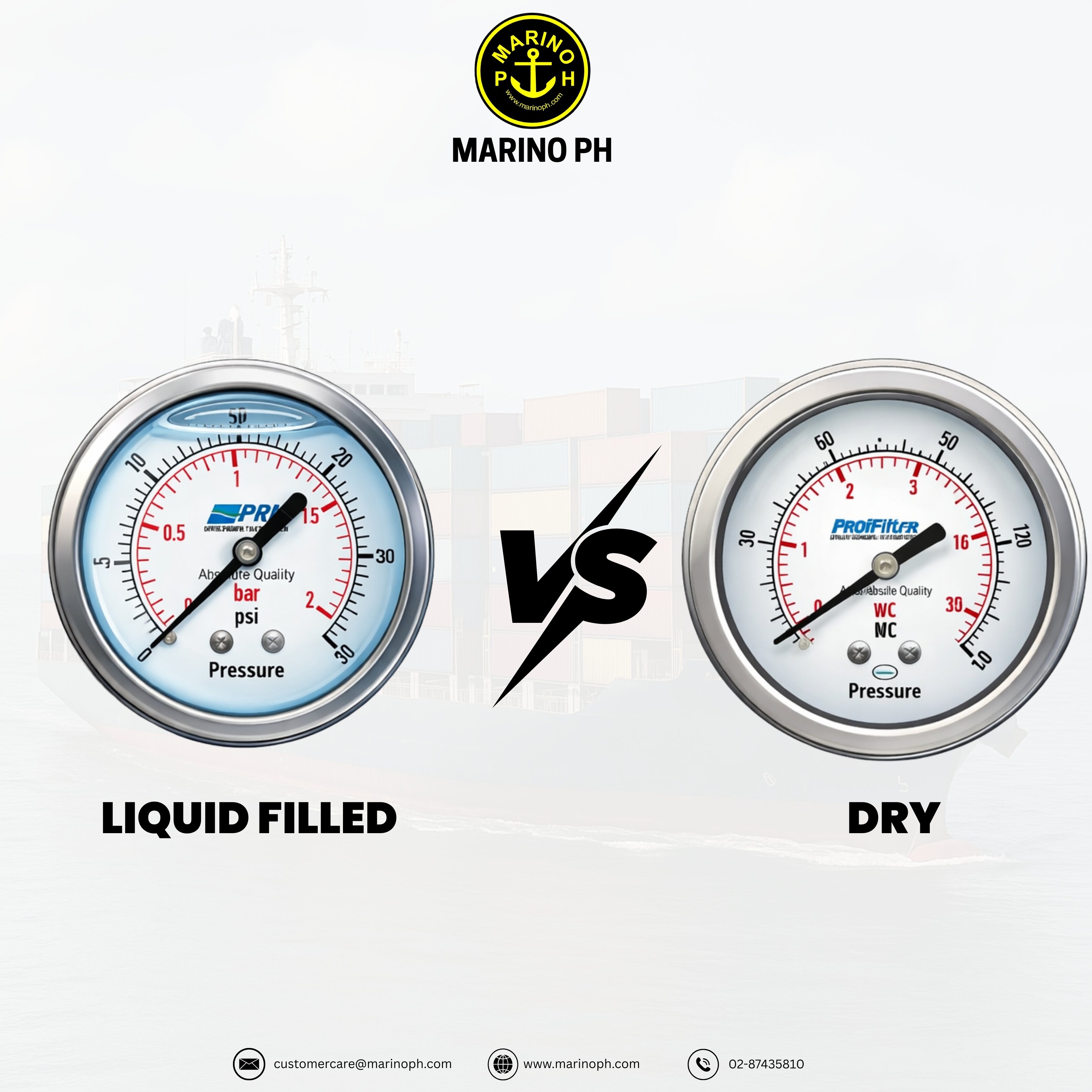
Difference Between a Liquid-Filled and a Dry Pressure Gauge
Pressure gauges are essential instruments used to measure the pressure of gases or liquids in various industrial systems. In sectors such as manufacturing, engineering, and maritime operations, accurate pressure readings are crucial for maintaining safety and operational efficiency. Two of the most commonly used types are liquid-filled pressure gauges and dry pressure gauges, each designed for different operating conditions.
Liquid-Filled Pressure Gauges
A liquid-filled pressure gauge contains a damping fluid commonly glycerin or silicone oil inside its casing. This liquid helps reduce the effects of vibration, pulsation, and mechanical shock on the gauge mechanism. Because of this internal fluid, the needle movement becomes more stable, allowing for clearer and more accurate readings even in demanding environments.
These gauges are particularly useful in high-vibration or harsh conditions, such as heavy machinery, marine engines, hydraulic systems, and industrial processing plants. The liquid also helps protect the internal components from moisture, corrosion, and wear, ultimately extending the lifespan of the instrument. For applications where durability and stability are essential, liquid-filled gauges are often the preferred choice.

ADVERTISMENT
Dry Pressure Gauges
A dry pressure gauge, on the other hand, does not contain any internal liquid. The casing is filled only with air, which makes the gauge simpler in design and typically more affordable than liquid-filled models. Dry gauges are best suited for stable environments where vibration and pressure pulsation are minimal.
These gauges are commonly used in indoor systems, laboratory equipment, HVAC systems, and other controlled environments where conditions are steady. While they provide reliable pressure readings, dry gauges offer less protection against vibration, shock, and moisture, which can affect performance if used in more demanding settings.
