
MARINO PH
Your Maritime Digital Hub

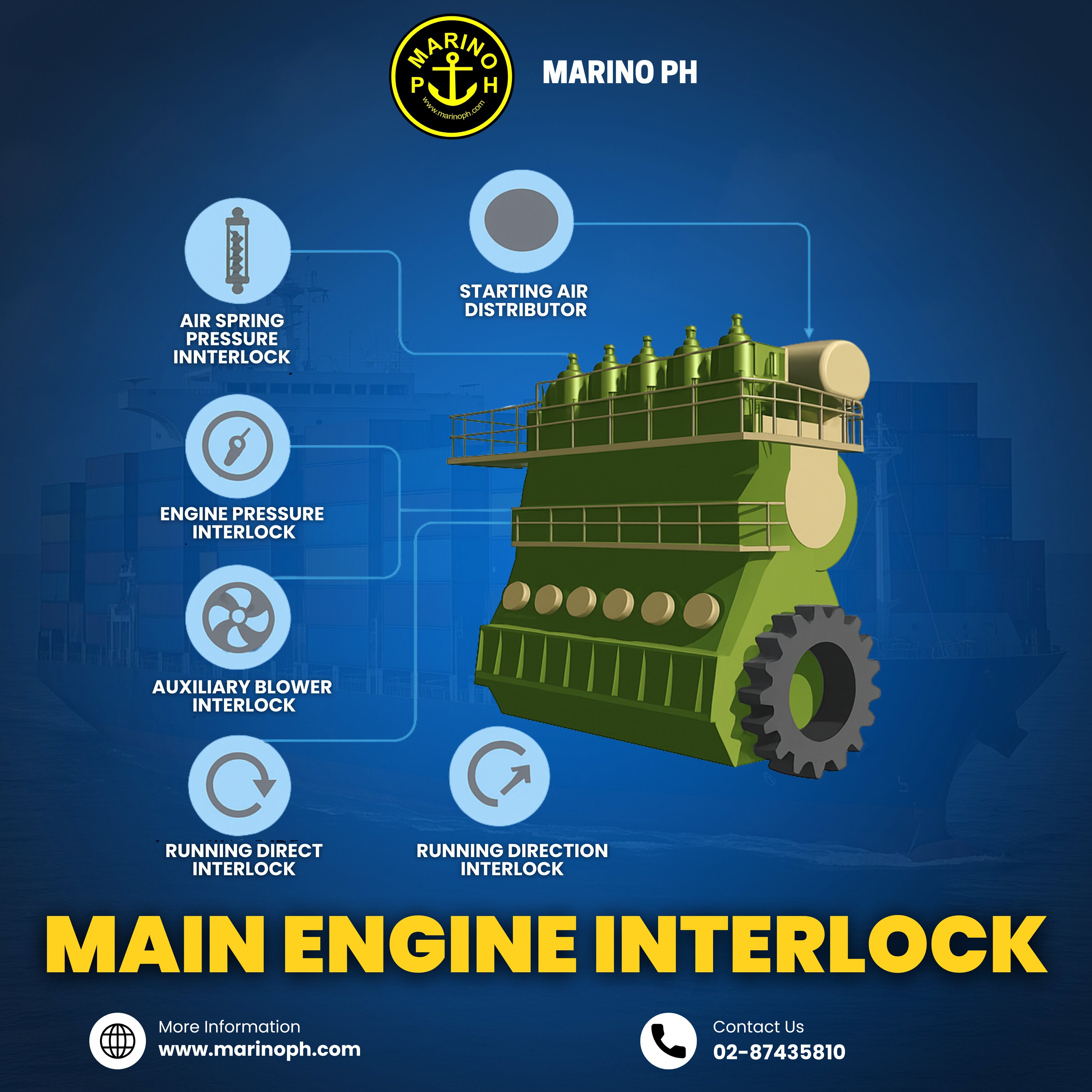
Main Engine Interlock System in Marine Engines
The main engine interlock system is a critical safety feature installed in modern marine propulsion systems. Its primary purpose is to prevent the main engine from starting or operating under unsafe conditions. By integrating several protective mechanisms, the interlock system ensures that the engine starts only when all required parameters and supporting systems are functioning properly. This helps protect both the machinery and the crew while maintaining safe ship operations.
One of the key components of the interlock system is the starting air distributor, which controls the timing and sequence of compressed air supplied to the engine cylinders during the starting process. The distributor ensures that starting air is delivered to the correct cylinder at the correct moment, allowing the engine to rotate safely and begin the combustion cycle. Without proper synchronization, the engine may fail to start or suffer mechanical damage.
Another important feature is the air spring pressure interlock. This mechanism ensures that sufficient air pressure is available in the starting air system before the engine can be started. If the air pressure drops below the required level, the interlock prevents engine start-up. This protects the engine from incomplete or failed starting attempts that could cause excessive wear on components.
The engine pressure interlock also plays a crucial role in maintaining engine safety. It monitors internal engine parameters such as lubricating oil pressure. If the oil pressure is insufficient, the interlock system prevents the engine from running to avoid severe damage to moving parts such as bearings, crankshafts, and pistons. Maintaining proper lubrication is essential for the longevity and reliability of the engine.

ADVERTISMENT
In addition, the system includes the auxiliary blower interlock, which ensures that the auxiliary blowers are operating when required, especially during low engine speeds. These blowers provide the necessary air for combustion before the turbocharger becomes fully effective. If the blower is not running when needed, the interlock prevents the engine from starting or continuing operation.
Finally, running direction interlocks and running direct interlocks ensure that the engine rotates in the correct direction before fuel injection begins. These safety measures are especially important for reversible marine engines, as incorrect rotation can cause mechanical failure and operational hazards.
Overall, the main engine interlock system is an essential safeguard in marine engineering. By combining multiple monitoring and control functions, it ensures that the engine operates only under safe conditions. This not only protects expensive machinery but also enhances the safety and efficiency of vessel operations.
