MARINO PH
Your Maritime Digital Hub

The Fire Tetrahedron: Understanding the Science Behind Fire
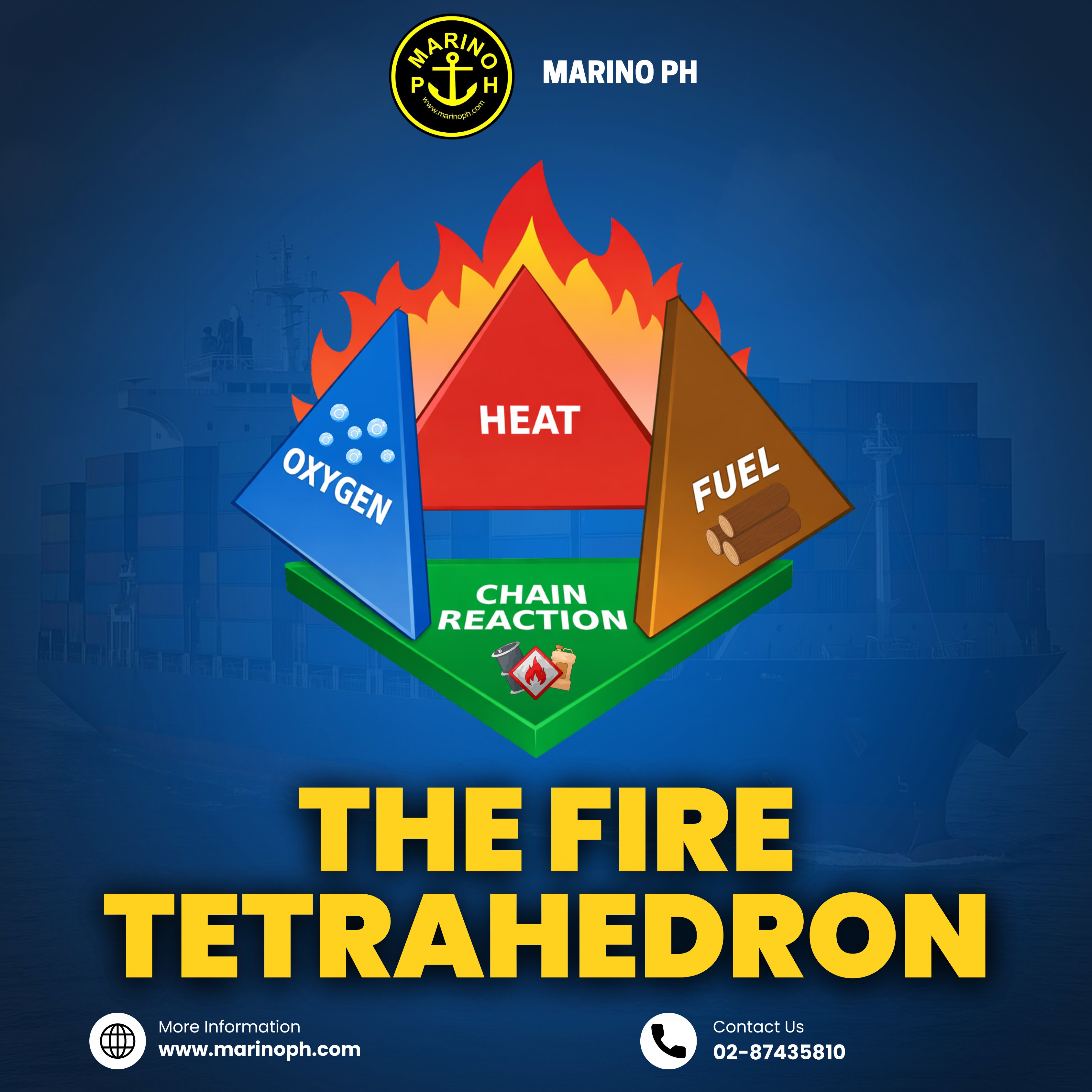
Fire is one of the most significant hazards onboard ships and in industrial workplaces. To effectively prevent and control it, we must first understand how it starts. The Fire Tetrahedron explains the four essential elements required for a fire to ignite and continue burning: heat, fuel, oxygen, and a chemical chain reaction.
Unlike the traditional “fire triangle,†which includes only heat, fuel, and oxygen, the fire tetrahedron adds a fourth component the chain reaction. This chemical process sustains combustion at the molecular level. Removing any one of these four elements will prevent a fire from starting or will extinguish an existing one.
The Four Elements of the Fire Tetrahedron
1. Heat
Heat provides the energy needed to raise materials to their ignition temperature. Onboard vessels, heat sources may include electrical faults, hot work operations, engine components, friction, or open flames.
2. Fuel
Fuel is any combustible material such as oil, fuel residues, lubricants, cargo, wood, paper, plastics, or flammable gases. Ships contain numerous fuel sources, making proper storage and housekeeping critical.
3. Oxygen
Oxygen supports combustion. In most environments, the air contains about 21% oxygen more than enough to sustain a fire. Enclosed spaces can become especially dangerous if oxygen levels are uncontrolled.
4. Chain Reaction
This is the self-sustaining chemical reaction that keeps the fire burning. Certain fire extinguishing agents, such as dry chemical powder, work by interrupting this reaction, effectively stopping the fire even if heat and fuel are still present.

ADVERTISMENT
Why the Fire Tetrahedron Matters in Maritime Safety
Understanding the fire tetrahedron is essential for seafarers, engineers, and maritime professionals. Fire remains one of the most serious emergencies at sea, and quick, informed action can save lives, protect cargo, and prevent catastrophic vessel damage.
By recognizing how these elements interact, crew members can respond faster and choose the correct firefighting method for each situation.
Building a Culture of Fire Awareness
Fire safety is not just about equipment it’s about knowledge and preparedness. Regular drills, proper maintenance, safe work practices, and continuous training ensure that everyone onboard understands the science of fire and how to combat it effectively.
