MARINO PH
Your Maritime Digital Hub

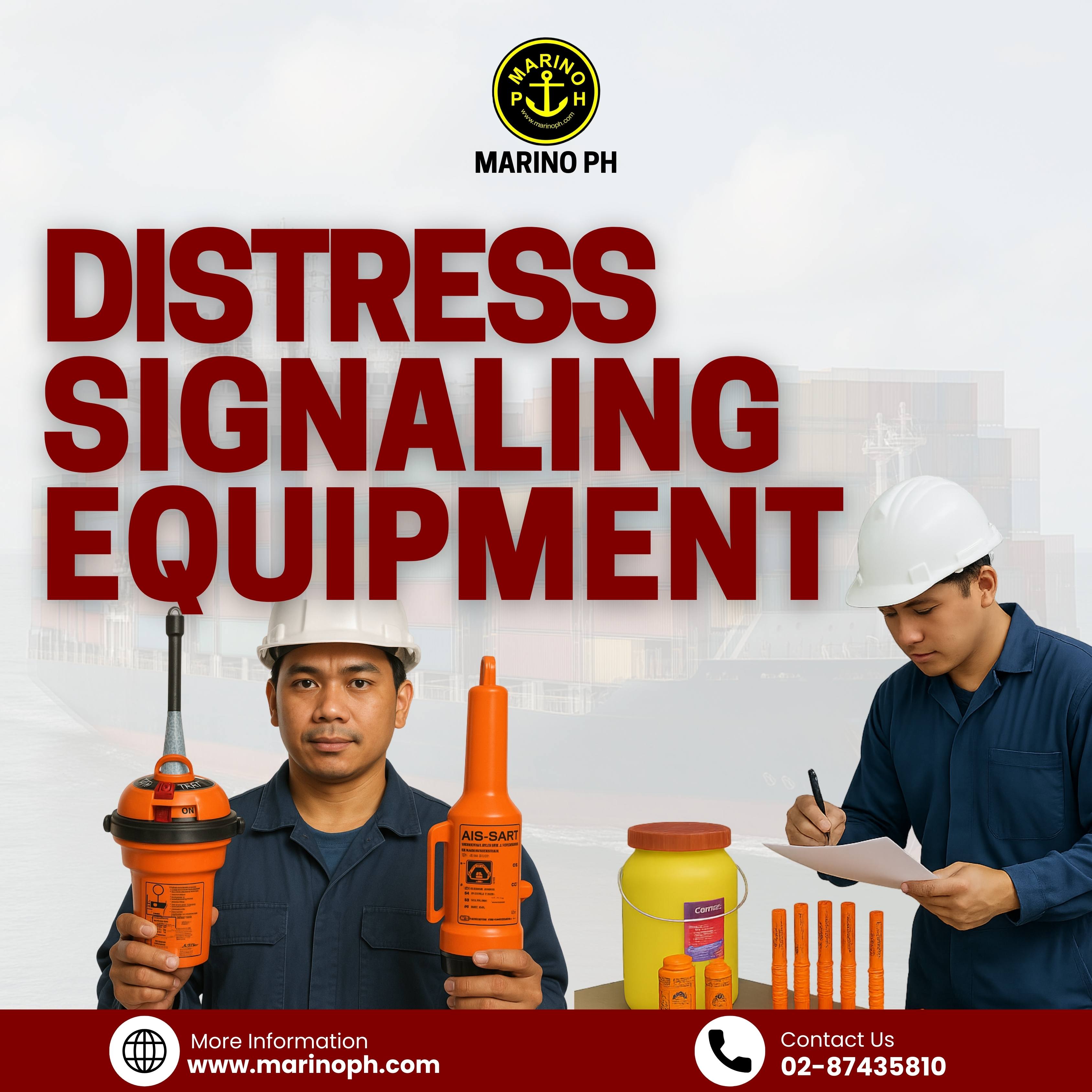
Distress signaling equipment plays a critical role in maritime safety by ensuring vessels and survival craft can quickly attract attention and be accurately located during emergencies at sea. These devices are designed to transmit alerts, provide location data, and create visible or audible signals that assist rescue teams in initiating timely and effective response operations.
Distress signals are generally categorized into sound and light signals, visual distress signals, and electronic distress signals. Sound and light signals, such as whistles, bells, horns, and signal lamps using Morse Code SOS, are essential for attracting attention, especially in low visibility or nighttime conditions. Visual distress signals include rocket parachute flares, handheld flares, and smoke signals. Rocket parachute flares rise high and emit a bright red light visible over long distances, while handheld flares are used at close range to pinpoint location. Smoke signals, producing dense orange smoke, are particularly effective for daytime visibility from both sea and air.
Electronic distress signals provide advanced location tracking and communication. EPIRBs transmit distress alerts and position information via satellite and can activate automatically or manually. SARTs and AIS-SARTs are used on survival craft to enhance detection by rescue vessels’ radar and AIS systems. Together, these devices significantly improve the chances of rapid detection, accurate location, and successful rescue at sea.

ADVERTISEMENT
