MARINO PH
Your Maritime Digital Hub

Understanding Bolt Failure: Key Types and Causes
Bolts are critical components in marine, industrial, and structural applications, ensuring the integrity and safety of assemblies. However, improper installation, material defects, or environmental factors can lead to bolt failure, posing risks to equipment and personnel. Understanding the types of failures is essential for prevention and maintenance.
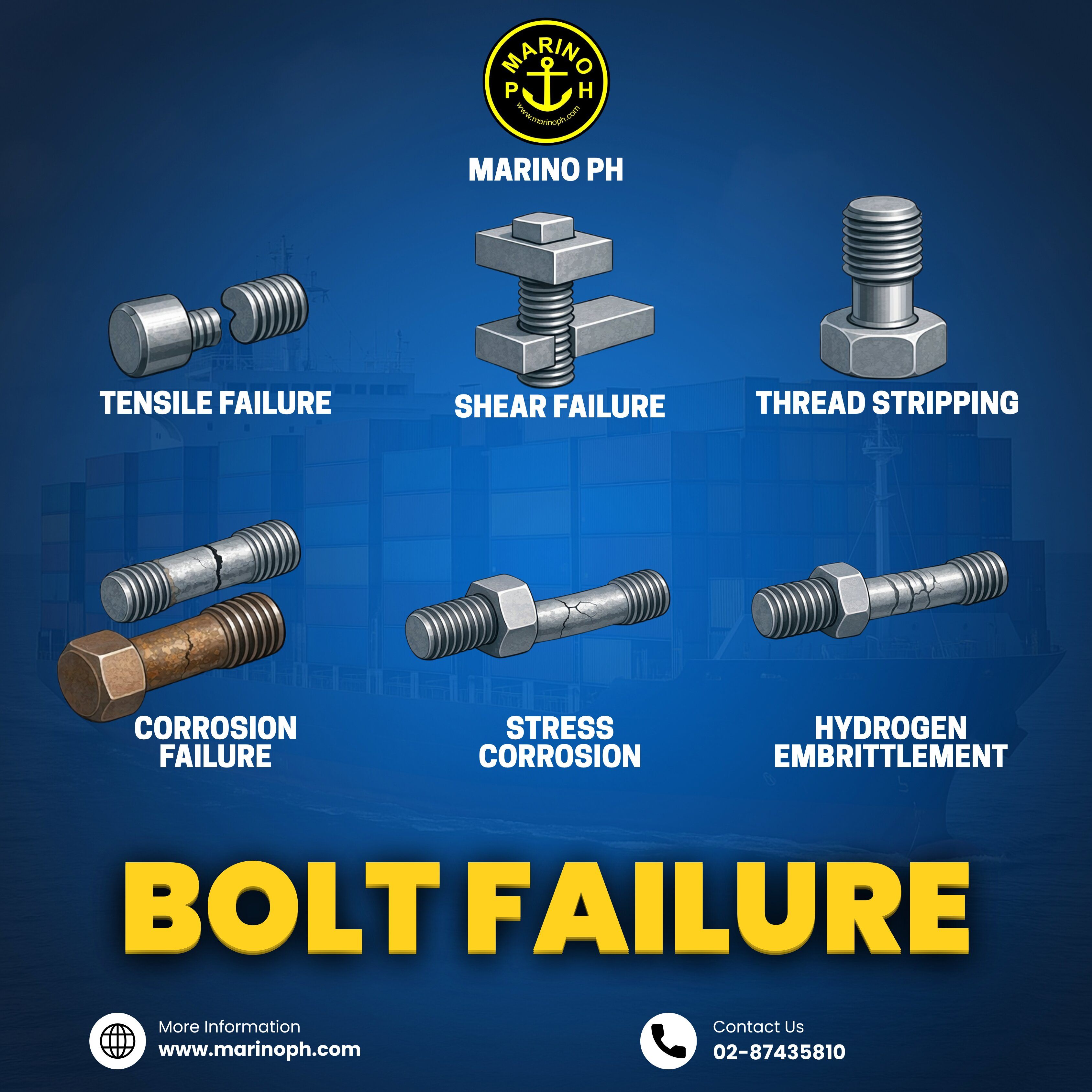
1. Tensile Failure – Occurs when a bolt is subjected to forces beyond its tensile strength, causing it to break or snap.
2. Shear Failure – Happens when forces act perpendicular to the bolt’s axis, cutting it across its cross-section.
3. Thread Stripping – Results from excessive torque or wear, damaging the bolt threads and preventing secure fastening.

ADVERTISMENT
4. Corrosion Failure – Exposure to moisture, chemicals, or saltwater can lead to rust and material degradation, weakening the bolt.
5. Stress Corrosion– A combination of tensile stress and corrosive environments causes cracks that propagate over time, reducing bolt reliability.
6. Hydrogen Embrittlement– Hydrogen absorption in high-strength bolts can make them brittle, resulting in sudden fracture under load.
Summary of the Topic
Bolts can fail from overload, shear, thread damage, corrosion, stress corrosion, or hydrogen embrittlement. Awareness of these causes helps prevent breakage and maintain safety in marine, industrial, and structural applications.
