
MARINO PH
Your Maritime Digital Hub

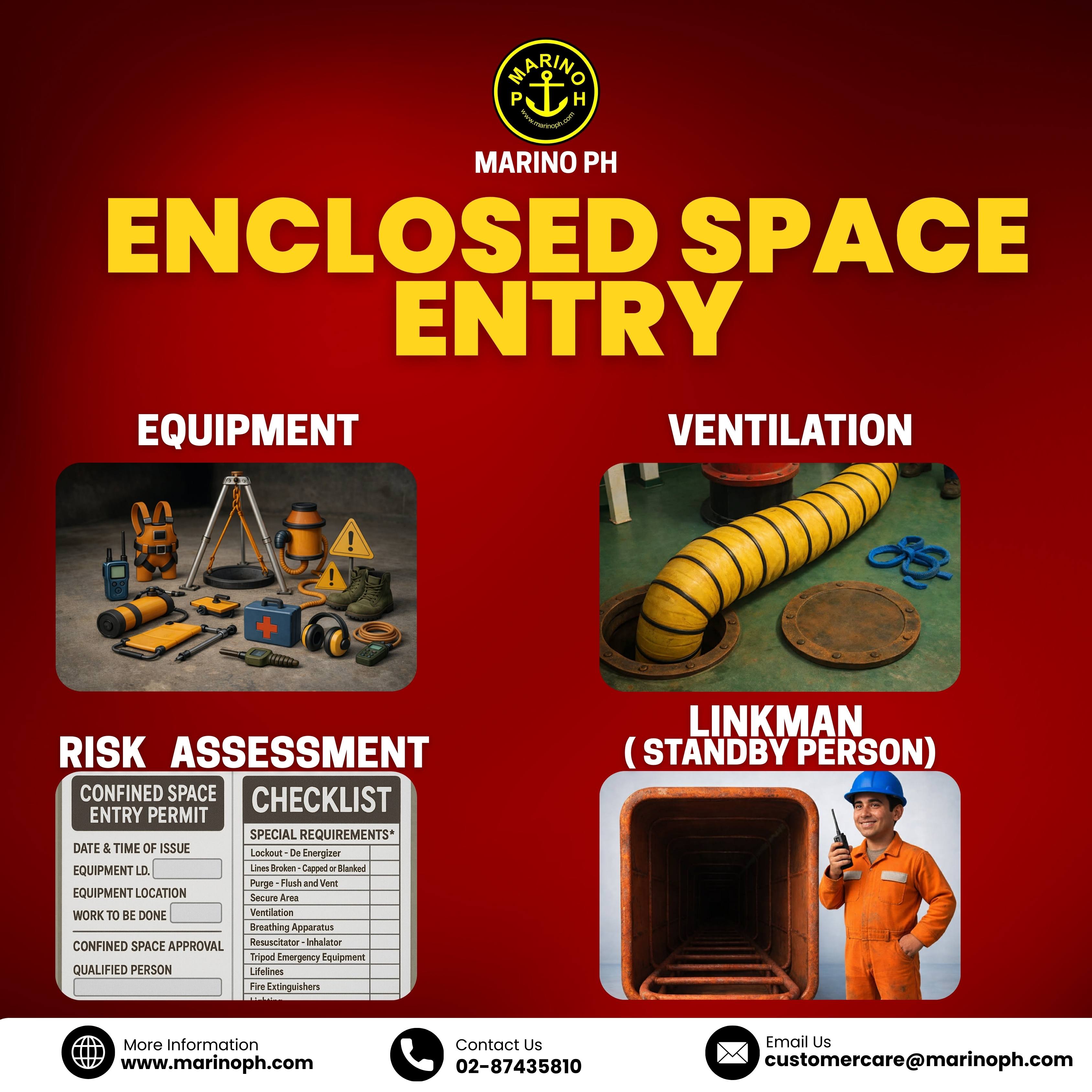
Enclosed Space Entry refers to the controlled and authorized process of entering a space that is not designed for continuous occupancy, has limited means of entry or exit, and may contain hazardous atmospheres or conditions.
Because of these risks, entry is only allowed after proper assessment, preparation, and permitting to ensure the safety of all personnel involved.
⸻
KEY REQUIREMENTS FOR ENCLOSED SPACE ENTRY
1. Equipment
All required safety equipment must be prepared and inspected before entry.
This includes rescue gear, communication devices, PPE, first-aid kits, and emergency response tools to ensure immediate action in case of an incident.
2. Ventilation
Proper mechanical ventilation must be established to supply fresh air and remove toxic, flammable, or oxygen-deficient atmospheres inside the space.
3. Risk Assessment
A thorough risk assessment must be completed to identify hazards such as toxic gases, low oxygen levels, heat stress, flooding, or mechanical risks before entry is permitted.
4. Linkman (Standby Person)
A trained standby person must remain outside the enclosed space at all times to monitor the entrant, maintain communication, and initiate emergency procedures if required.
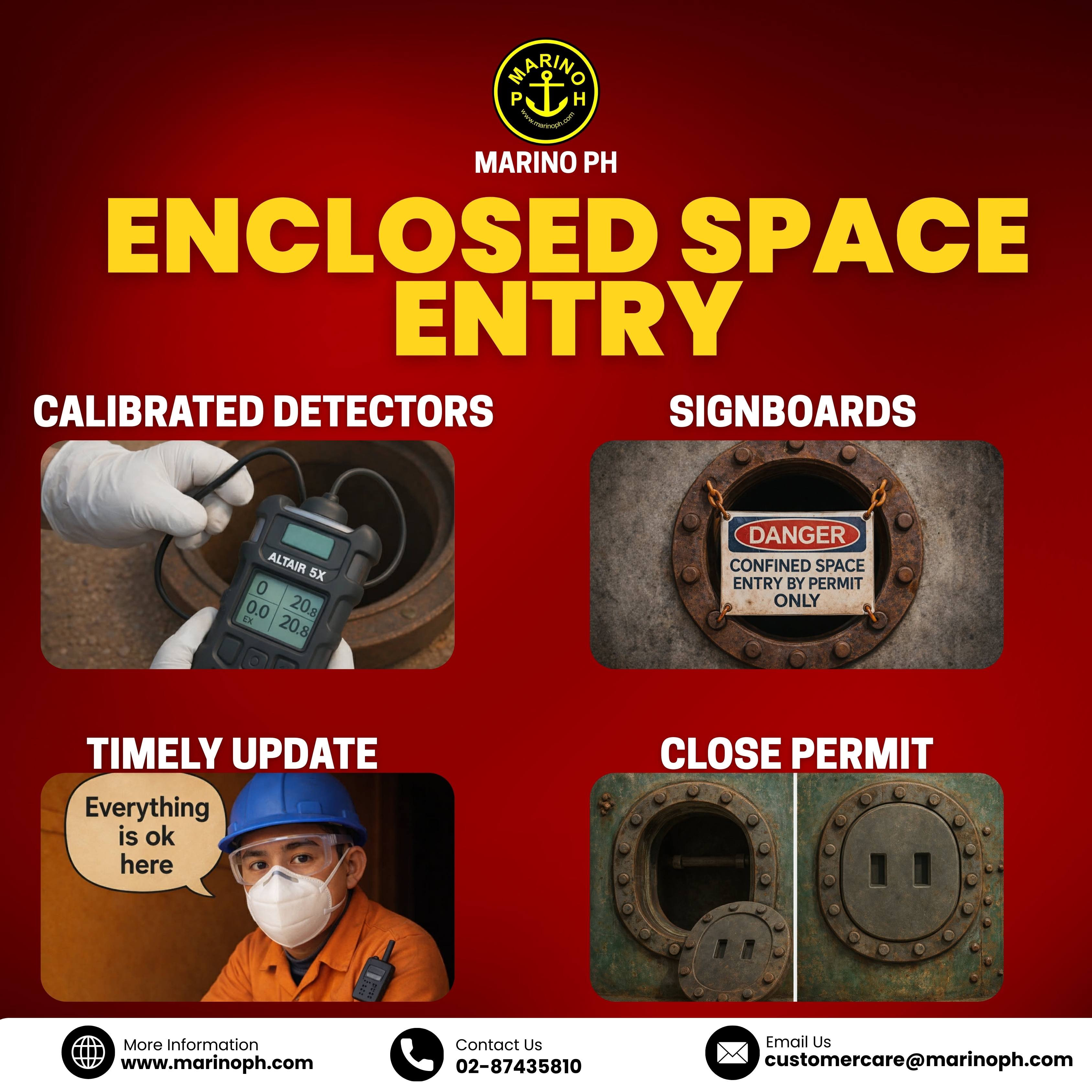
5. Timely Update
Continuous communication must be maintained between the entrant and standby person to provide regular status updates and confirm that conditions remain safe during entry.
6. Calibrated Detectors
Gas detectors used must be properly calibrated to accurately monitor oxygen levels, flammable gases, and toxic substances throughout the operation.
7. Signboards
Warning signs must be displayed clearly at entry points to inform personnel that the space is classified as an enclosed space and entry is restricted.
8. Close Permit
After work completion, the enclosed space entry permit must be formally closed, confirming that all personnel are accounted for, tools are removed, and the space is secured.

ADVERTISEMENT
