MARINO PH
Your Maritime Digital Hub

Types of Grease Used in Marine Applications
Proper lubrication is essential for the safe, efficient, and long-term operation of marine machinery. Different operating conditions such as temperature, moisture, load, and movement require specific types of grease. Understanding the correct grease to use helps prevent premature wear, corrosion, and equipment failure. Below are the common types of grease used in marine and industrial environments.

ADVERTISMENT
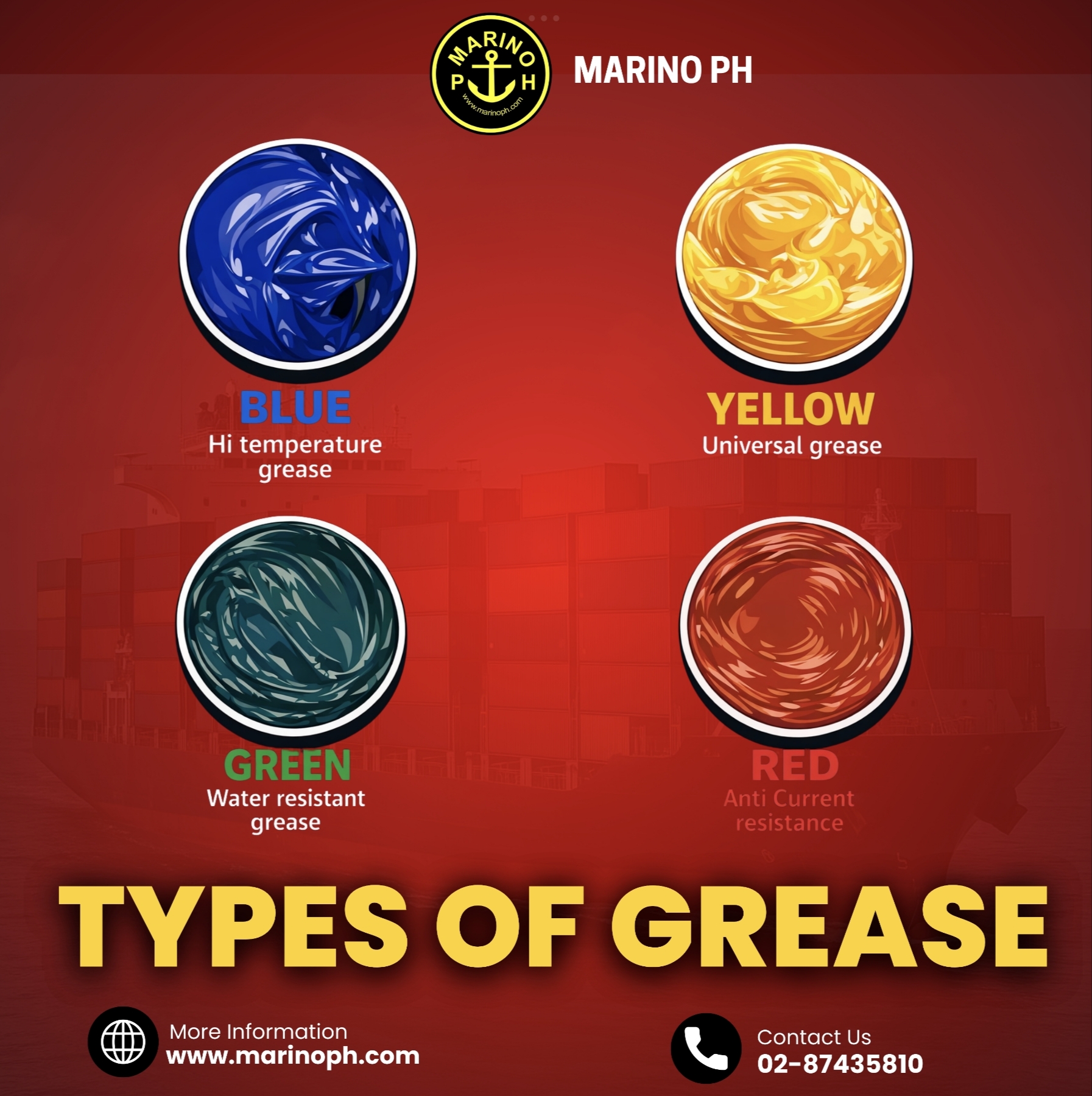
Blue Grease – High Temperature Grease
Blue grease is specially formulated to withstand high operating temperatures. It is commonly used in components exposed to heat such as bearings, engine parts, and rotating machinery. This type of grease maintains its consistency and lubricating properties even under extreme thermal conditions, reducing friction and protecting parts from heat-related damage.
Yellow Grease – Universal Grease
Yellow grease is a general-purpose lubricant suitable for a wide range of applications. It is commonly used for routine lubrication of mechanical components such as hinges, pins, linkages, and lightly loaded bearings. Its versatility makes it ideal for everyday maintenance tasks onboard ships and in workshops.
Green Grease – Water Resistant Grease
Green grease is designed for environments where water exposure is frequent. It provides excellent resistance to washout and corrosion, making it ideal for deck machinery, steering systems, and equipment exposed to seawater or high humidity. This grease helps protect metal surfaces from rust while maintaining effective lubrication.
Red Grease – Anti-Current Resistance Grease
Red grease is formulated to resist displacement caused by movement, vibration, and electrical or mechanical currents. It is often used in applications where consistent lubrication is required under dynamic conditions, such as couplings, moving joints, and heavily loaded components. Its strong adhesion helps ensure long-lasting protection.
Importance of Using the Correct Grease
Using the right type of grease for each application improves equipment reliability, extends service life, and enhances operational safety. In marine environments, selecting grease based on temperature, moisture exposure, and mechanical stress is critical to maintaining optimal performance.
