MARINO PH
Your Maritime Digital Hub

Litmus Test
What is a Litmus Test
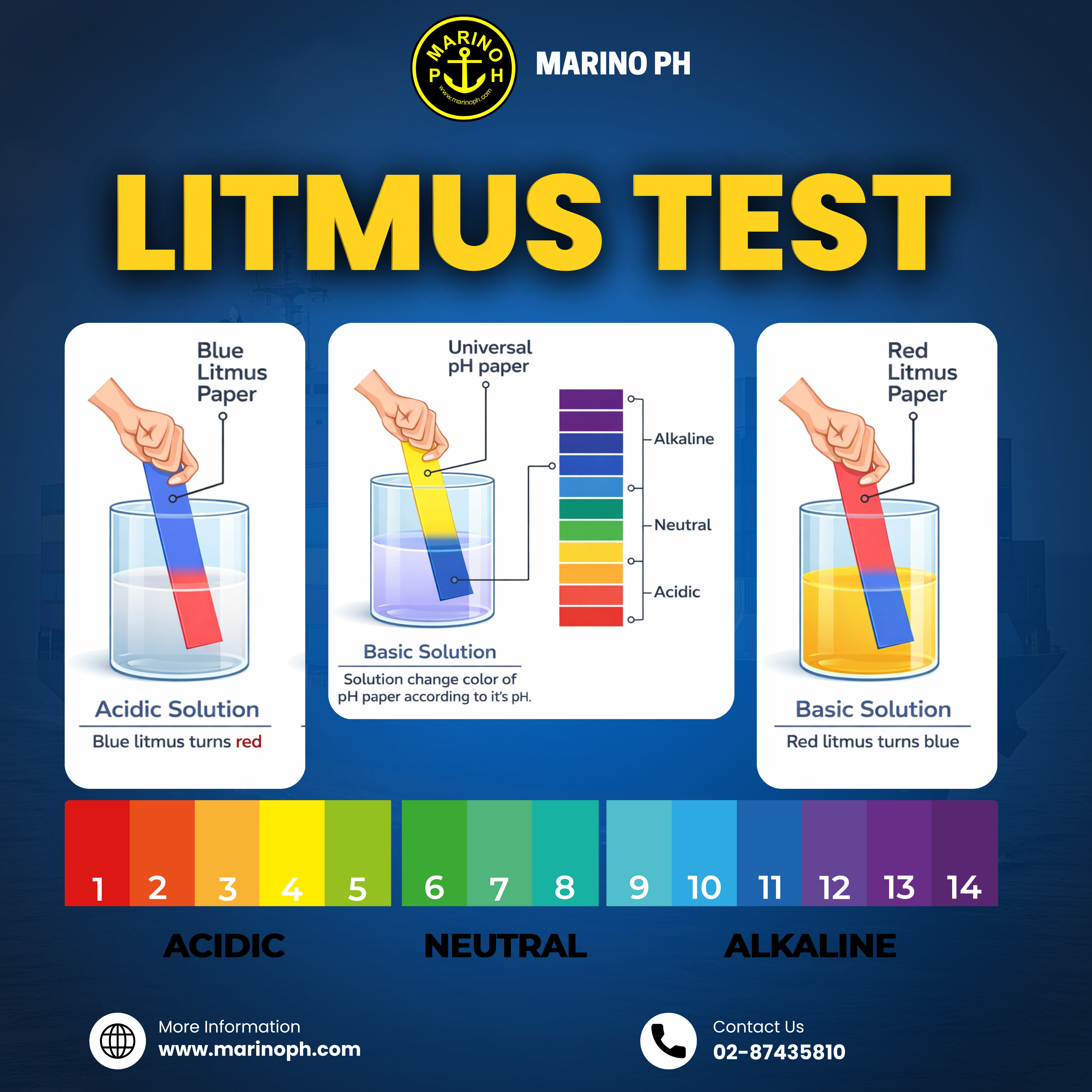
The litmus test is a simple method used to identify whether a liquid is acidic, neutral, or alkaline (basic). It uses special paper called litmus paper that changes color when dipped into a solution.
There are two types of litmus paper: blue litmus paper and red litmus paper. A universal pH paper can also be used to show a wider pH range using color changes.
Purpose
The litmus test is used to quickly check the chemical nature of a liquid. It helps determine if a substance is safe to handle or suitable for use in systems such as water treatment, cleaning, or maintenance.
How It Works
Blue litmus paper turns red in an acidic solution
Red litmus paper turns blue in a basic (alkaline) solution
Universal pH paper changes color based on the pH level

ADVERTISMENT
pH Scale
pH 1–6: Acidic
pH 7: Neutral
pH 8–14: Alkaline
Common Uses
Water testing
Chemical identification
Safety checks
Education and training
Key Note
The litmus test shows acidic or alkaline condition only. It does not give an exact pH value.
