MARINO PH
Your Maritime Digital Hub

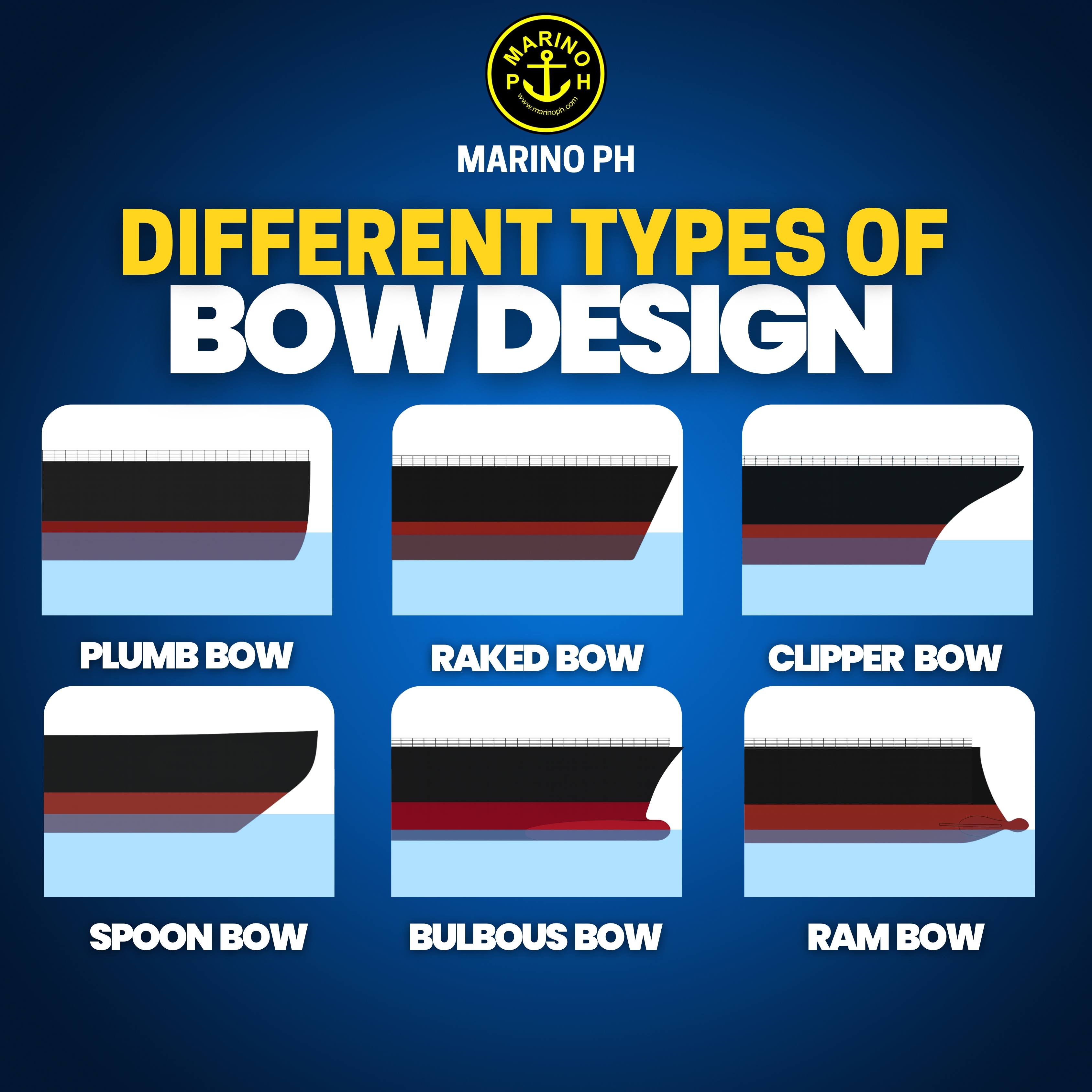
The bow is the forward-most part of a ship, designed to cut through water efficiently. Its shape affects speed, fuel efficiency, stability, and seakeeping. Different bow designs help vessels perform better in various conditions such as rough seas, ice navigation, or high-speed operations.
Spoon Bow
A smoothly curved bow that reduces wave resistance and improves fuel efficiency.
Common on: bulk carriers, tankers, container ships, and general cargo vessels.
Bulbous Bow
A bow with a protruding bulb below the waterline designed to reduce drag and improve speed and fuel economy.
Usually seen on: large container ships, tankers, bulk carriers, LNG/LPG carriers, and cruise ships.
Ram Bow
A strong, forward-projecting bow built to withstand impact, originally for naval use.
Usually seen on: naval warships, ice-strengthened vessels, and some specialized research ships.
Plumb Bow
A nearly vertical bow that maximizes waterline length and improves speed and cargo efficiency.
Usually seen on: modern container ships, passenger ships, ferries, and naval vessels.
Raked Bow
A backward-sloping bow that reduces spray and improves performance in rough seas.
Usually seen on: tankers, bulk carriers, offshore supply vessels (OSV), and fishing vessels.
Clipper Bow
A long, curved bow designed to cut through waves smoothly.
Usually seen on: traditional sailing ships, older passenger liners, and classic training vessels.

ADVERTISEMENT
