MARINO PH
Your Maritime Digital Hub

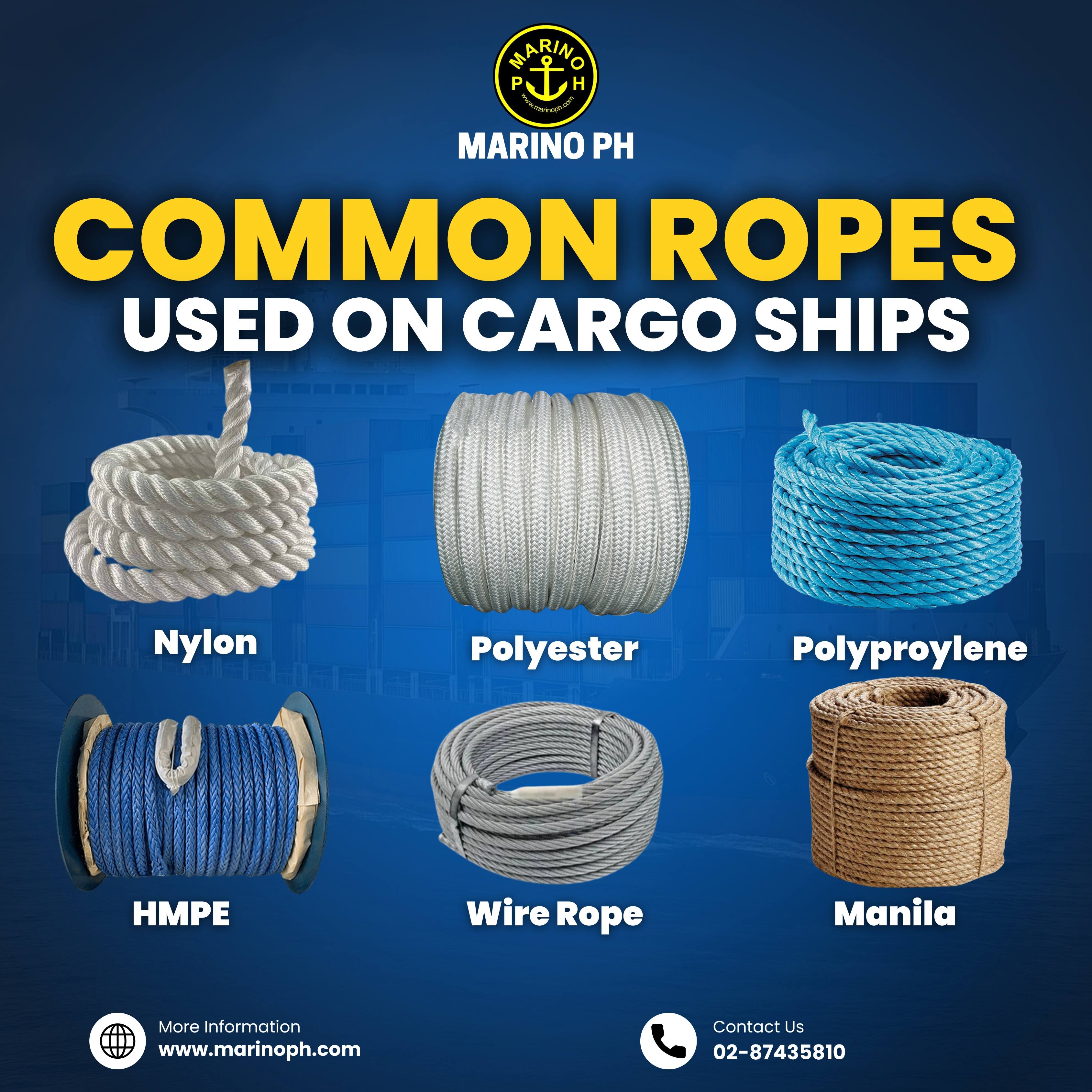
Merchant ropes are heavy-duty lines, often synthetic (nylon, polyester) or wire, used on commercial ships for mooring (securing to docks), towing, cargo handling, and safety, designed for extreme strength, durability, and specific elasticity to manage ship movement against wind, tides, and currents, with different types like spring lines and breast lines handling specific motions.
Key Functions & Type
‣Mooring: Securing vessels to berths using bollards and cleats, controlling lateral (breast lines) and longitudinal (spring lines) movement.
‣Towing & Guiding: Assisting other vessels or guiding ships into port.
‣Cargo Handling: Lifting and moving cargo during loading/unloading.
‣Safety: Acting as lifelines or barriers on deck.
Types of Ropes
‣Nylon: Excellent shock absorption (elasticity) for heavy impacts, good abrasion resistance, but degrades in UV light.
‣Polyester: Strong, low stretch, good UV and water resistance, ideal for steady loads but can be slack under tension.
‣Polypropylene: Lightweight, floats, affordable, resistant to chemicals, but high stretch and less durable long-term.
‣HMPE (Dyneema/Spectra): Extremely strong, low stretch, very light, excellent performance for heavy loads but costly.
‣Wire Rope: Steel cables for maximum strength in very harsh, heavy-duty applications.
‣Manila (Natural): Biodegradable, traditional, but susceptible to rot and UV damage.

ADVERTISEMENT
