MARINO PH
Your Maritime Digital Hub

Safety Valves vs Relief Valves: Understanding Their Roles in Marine Engineering
Safety valves and relief valves are crucial pressure-control devices used throughout marine and industrial systems, but they are often misunderstood or used interchangeably. In reality, each valve serves a distinct purpose based on the type of fluid in the system and the level of protection required.
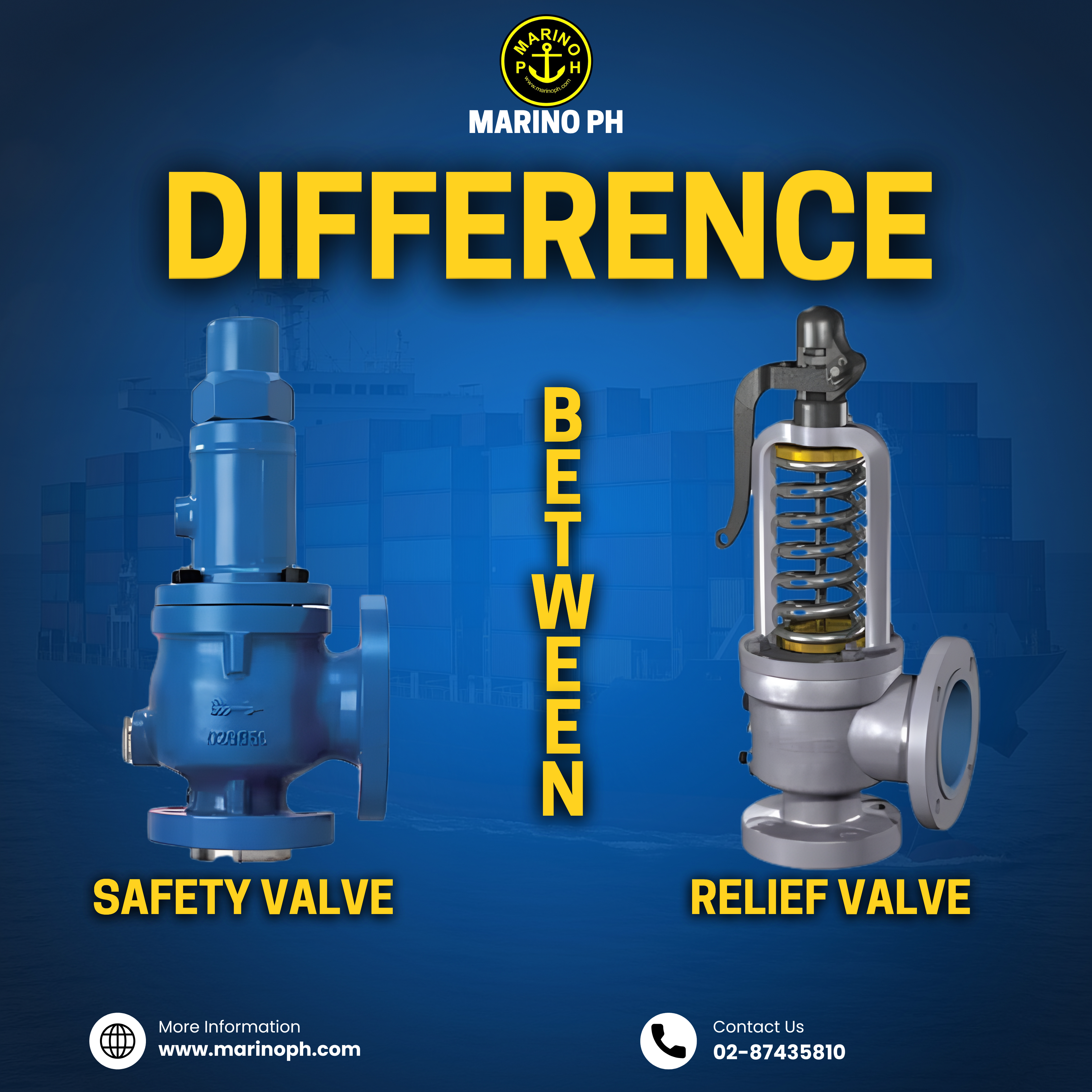
Safety valves are primarily used in systems containing compressible fluids, such as steam, air, or gas. Their main purpose is to prevent dangerous overpressure conditions that can occur suddenly, especially in boilers and steam lines. When pressure reaches the set limit, a safety valve opens instantly, releasing a large amount of steam or gas in what is known as “pop action.†This rapid discharge prevents severe equipment damage, structural failure, and potential explosions, making safety valves one of the most critical safety components on board a vessel.

ADVERTISMENT
Relief valves, in contrast, are designed for incompressible fluids, including fuel oil, lube oil, hydraulic oil, and cooling water. Instead of opening suddenly, a relief valve operates in a gradual, proportional manner, allowing pressure to be controlled smoothly as it rises. These valves protect pumps, pipelines, and machinery from conditions like pump overload, blocked filters, or restricted flow. By recirculating excess fluid back to the suction side or a return line, relief valves help maintain stable operating pressure and prevent long-term mechanical damage.
In marine engineering, both valves are essential—but for very different reasons. Safety valves prevent sudden catastrophic failures, while relief valves protect systems from continuous or progressive pressure increases. Understanding their differences ensures proper system design, operation, and maintenance across all shipboard machinery.
