
MARINO PH
Your Maritime Digital Hub

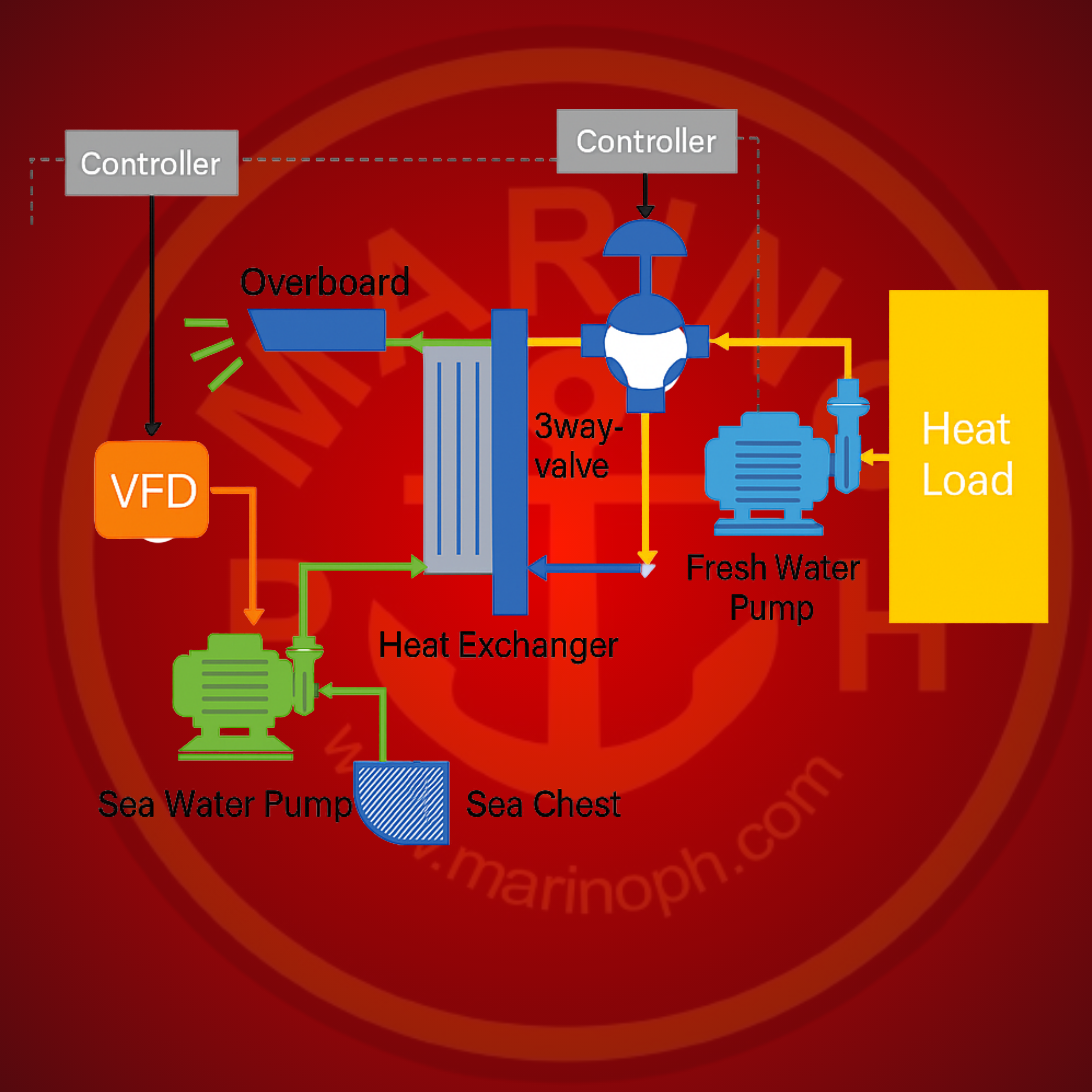
Central Cooling System (CCS) on Ships
The Central Cooling System (CCS) is the primary method used on modern vessels to maintain safe operating temperatures for engines and auxiliary machinery. Instead of relying on multiple separate cooling circuits, a CCS uses a single freshwater loop to cool major equipment. This freshwater absorbs heat from engines and machinery and then transfers that heat to seawater through a central cooler. By using freshwater internally and seawater externally, the system offers both efficiency and protection for vital components.
Purpose of the Central Cooling System
The CCS is designed to provide a stable and controlled cooling environment for the ship’s mechanical systems. Its main purposes include:
•Preventing Overheating: Engines, compressors, generators, and pumps produce significant heat during operation. The CCS ensures they remain within safe temperature ranges.
•Reducing Corrosion: Freshwater circulates inside machinery rather than corrosive seawater, greatly extending equipment lifespan.
•Improving Efficiency: Consistent cooling improves fuel efficiency, power output, and overall engine performance
•Simplifying Maintenance: A centralized system requires fewer individual coolers, making inspection and repairs easier and more cost-effective.
•Environmental and Safety Protection: Proper cooling prevents machinery failures that could lead to pollution, downtime, or emergency situations.
A Brief History of Marine Cooling Systems
Early ships relied on direct seawater cooling, where seawater passed directly through engines. While simple, this system caused rapid corrosion, fouling, and frequent breakdowns. As engine outputs increased with advancements in marine propulsion, a more reliable and controlled method became necessary.
By the mid- 20th century, ships shifted toward a jacket-water (freshwater) cooling system, where freshwater circulated around the engine block. However, many small coolers were still used for individual machinery, creating complexity.
The modern Central Cooling System emerged as a solution:
•One freshwater loop for all machinery
•One central cooler to transfer heat to seawater
•Better temperature control and lower maintenance
Today, the CCS is standard on most commercial vessels due to its efficiency and durability.

ADVERTISMENT
How the Central Cooling System Works
A CCS operates using two main circuits:
1. Freshwater Loop – Closed Circuit
Freshwater circulates continuously through engines and auxiliaries, absorbing heat.
This loop includes:
Freshwater pumps
Expansion tank
Temperature-control valves
2. Central Cooler – Heat Exchange Point
The warmed freshwater releases its heat to seawater through a plate-type heat exchanger.
3. Seawater Loop – Open Circuit
Seawater pumps draw seawater in, carry heat away from the cooler, and discharge it safely overboard.
Why the CCS Matters in Modern Shipping
•Longer machinery life
•Lower operating costs
•Higher energy efficiency
•Reduced risk of engine failure
•Safer voyages and stricter compliance with marine standards
SUMMARY OF THE TOPIC
The Central Cooling System is the backbone of shipboard temperature control. By combining efficiency, corrosion protection, and simple maintenance, it supports the demands of modern marine engineering. Its evolution from seawater cooling to today’s closed-loop system highlights how essential cooling innovations are to the safety and reliability of maritime operations.
