
MARINO PH
Your Maritime Digital Hub


The Four-Stroke Engine
The four-stroke engine is one of the most important innovations in mechanical and marine engineering. Known for its reliability and efficiency, this internal-combustion engine powers ships, vehicles, and generators across the world. Each cycle of this engine goes through four distinct strokes — intake, compression, power, and exhaust — that convert fuel into mechanical energy efficiently and cleanly.
A Brief History
The concept of the four-stroke cycle was first proposed in 1862 by French engineer Alphonse Beau de Rochas, who described how an engine could work more efficiently by separating the intake, compression, power, and exhaust processes. This theory was brought to life in 1876 by German engineer Nikolaus August Otto, whose engine design became known as the “Otto Cycle.†His invention marked the foundation of modern engines, influencing both automotive and marine propulsion systems.
What It Is and How It Works
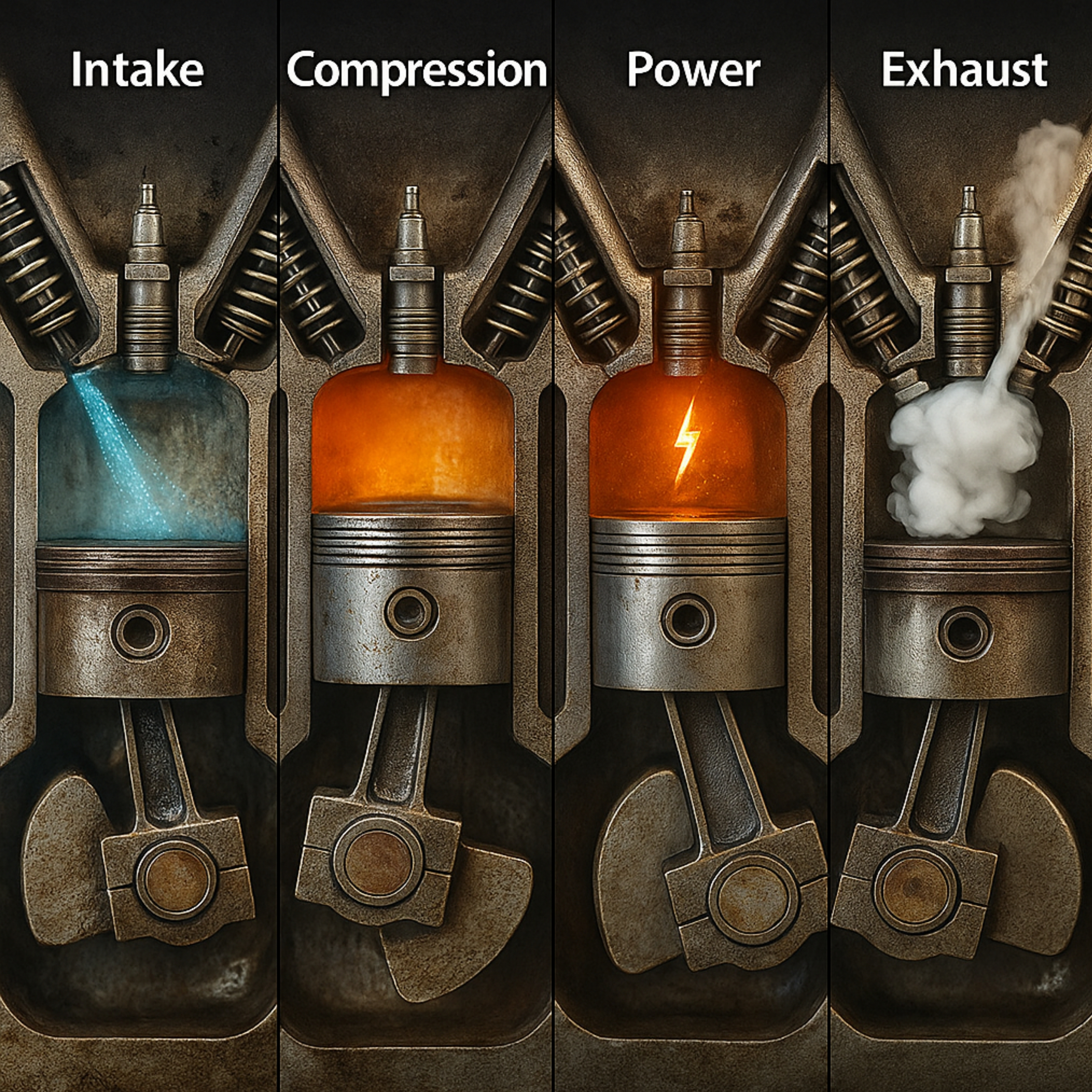
A four-stroke engine completes its power cycle in four piston movements (two crankshaft revolutions).
• Intake stroke: The piston moves down, drawing in air or an air-fuel mixture.
• Compression stroke: The piston rises, compressing the mixture for efficient combustion.
• Power stroke: Ignition occurs, forcing the piston down and producing mechanical energy.
• Exhaust stroke: The spent gases are expelled, preparing the cylinder for the next cycle.
Because each phase is separate, combustion is more controlled and efficient, leading to smoother operation and better fuel economy, key reasons it’s preferred in most marine and automotive engines.
Purpose and Importance in Marine Engineering
Onboard ships, four-stroke engines serve two main purposes: propulsion (especially in smaller vessels) and power generation for electrical systems. These engines are valued for their durability, fuel efficiency, and ease of maintenance, making them ideal for long voyages where reliability is crucial. Their clear stroke sequence also reduces emissions, supporting the shipping industry’s push toward cleaner operations.
In marine applications, a four-stroke engine typically uses valve timing systems, lubrication pumps, and turbochargers to enhance performance under continuous load conditions. Regular maintenance — such as valve clearance checks and lubrication monitoring — ensures stable operation over thousands of running hours.

Two-Stroke vs. Four-Stroke
The main difference between a two-stroke and a four-stroke engine lies in their operation cycle. A two-stroke completes a power stroke every crankshaft revolution, while a four-stroke needs two revolutions. This means two-strokes produce more power for their size but consume more fuel and emit more pollutants. In contrast, four-stroke engines burn fuel more completely, run quieter, and last longer — traits that make them ideal for ships, generators, and heavy machinery.
Advantages of a Four-Stroke Engine
1. Higher Fuel Efficiency:
Fuel burns more completely, reducing consumption and operational costs.
2. Lower Emissions: Cleaner combustion produces fewer pollutants, ideal for strict marine and environmental regulations.
3. Longer Engine Life:
Because combustion is smoother and oil is not mixed with fuel, wear and tear are reduced.
4. Better Torque and Stability:
The engine delivers consistent power output at varying loads critical for ships and generators.
5. Efficient Lubrication System:
The separate oil sump system ensures continuous lubrication without oil burning.
6. Reduced Noise and Vibration:
The even power delivery makes the engine run more quietly than a two-stroke.
Why It Matters
The four-stroke engine remains the standard because it balances power, efficiency, and sustainability. Its design allows engineers to fine-tune combustion, reduce emissions, and extend engine life — essential qualities in today’s environmentally conscious marine industry.
SUMMARY OF THE TOPIC
The four-stroke engine remains a cornerstone of modern engineering, valued for its balance of efficiency, durability, and environmental performance. Its precise four-phase operation — intake, compression, power, and exhaust — ensures cleaner combustion, smoother performance, and longer engine life. In marine engineering, this translates to reliable propulsion and dependable power generation, even under demanding conditions. By combining power with precision, the four-stroke engine continues to drive innovation across industries, proving its essential role in achieving both performance and sustainability at sea and on land.
