MARINO PH
Your Maritime Digital Hub

Sewage Treatment Plants Onboard Ships: Keeping Our Oceans Clean
Sewage Treatment Plants (STPs) onboard ships play a crucial role in protecting our oceans from pollution. This article explores their history, purpose, importance, and operation highlighting how modern vessels manage wastewater responsibly to meet international standards and support sustainable maritime practices under MARPOL Annex IV.
Introduction: Why Ships Need Sewage Treatment Plants
Every ship produces sewage from toilets, galleys, and accommodation areas. If discharged untreated, this waste can harm marine life and coastal waters. To prevent pollution, ships are fitted with Sewage Treatment Plants compact systems that treat and disinfect wastewater before release, ensuring compliance with IMO regulations.
Passenger ships and vessels over 400 gross tonnage must be equipped with STPs to safeguard human health and marine ecosystems.
A Brief History of Sewage Treatment at Sea
In the past, ships routinely released raw sewage into the ocean. Growing awareness of pollution’s impact led to international action. The International Maritime Organization (IMO) introduced MARPOL Annex IV in 2003, requiring all ships to properly manage sewage.
Over time, basic holding tanks evolved into modern biological treatment units capable of producing clean effluent. Some nations, like the United States, had already established strict sewage control laws, paving the way for global standards.
Purpose of a Shipboard Sewage Treatment Plant
The main goal of a shipboard STP is to treat and purify wastewater before discharge. It aims to:
•Remove solids and organic matter
•Eliminate harmful bacteria and pathogens
•Reduce odors and contaminants
•Meet MARPOL and flag-state requirements
Treated effluent must meet specific IMO limits on biochemical oxygen demand (BOD), suspended solids, and coliform bacteria before being safely discharged.

ADVERTISMENT
How a Shipboard STP Works
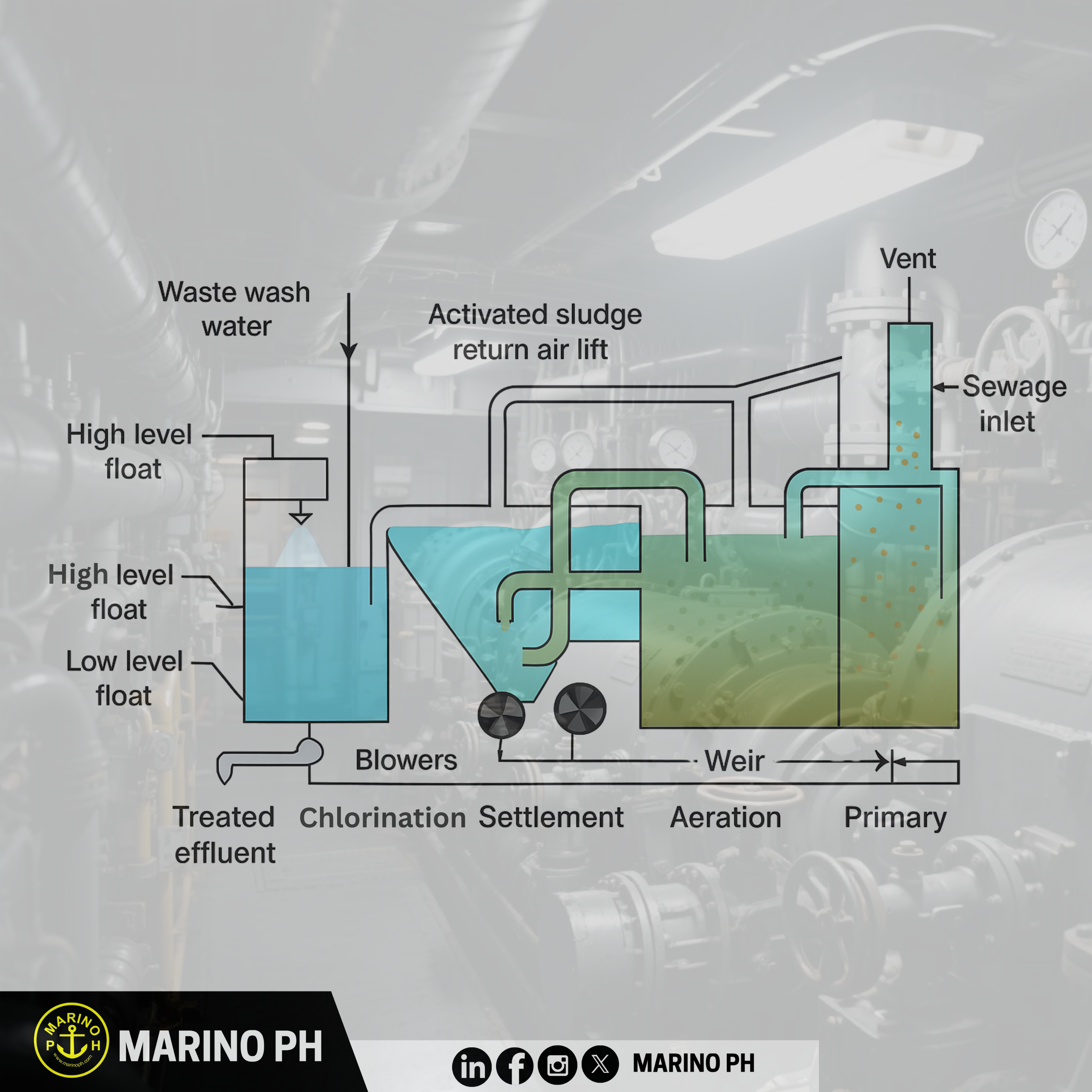
A typical sewage treatment system operates in three main stages:
1. Primary Treatment– Screens and sedimentation separate solids and sludge.
2. Secondary Treatment– Aerobic bacteria break down organic waste in aeration chambers.
3. Tertiary Treatment (Disinfection)– Effluent is disinfected using chlorine, UV light, or ozone, ensuring pathogens are destroyed before discharge.
Some systems also include sludge handling units for safe disposal in port facilities.
Importance of Sewage Treatment Onboard Ships
•Sewage treatment is both an environmental and legal requirement. Its importance includes:
•Preventing marine pollution by reducing harmful discharge
•Protecting crew health by controlling bacteria and odors
•Ensuring legal compliance with MARPOL Annex IV and the International Sewage Pollution Prevention Certificate (ISPPC)
•Supporting sustainability, reflecting the maritime industry’s move toward greener operations
Regulations and Future Developments
MARPOL Annex IV allows discharge of treated sewage only when ships are at least 3 nautical miles from land, or 12 miles for comminuted and disinfected waste. Ships must maintain certified STPs and undergo regular inspection to ensure compliance.
Modern systems are now automated, compact, and energy-efficient. New technologies like membrane bioreactors (MBR), advanced UV disinfection, and digital monitoring aim to achieve zero-discharge or water-recycling operations leading to cleaner, more sustainable shipping.
Summary of the Topic
Though often unseen below deck, Sewage Treatment Plants are essential for keeping oceans clean. By effectively managing wastewater, ships not only meet international standards but also help preserve marine biodiversity and contribute to a healthier, sustainable planet.
