MARINO PH
Your Maritime Digital Hub

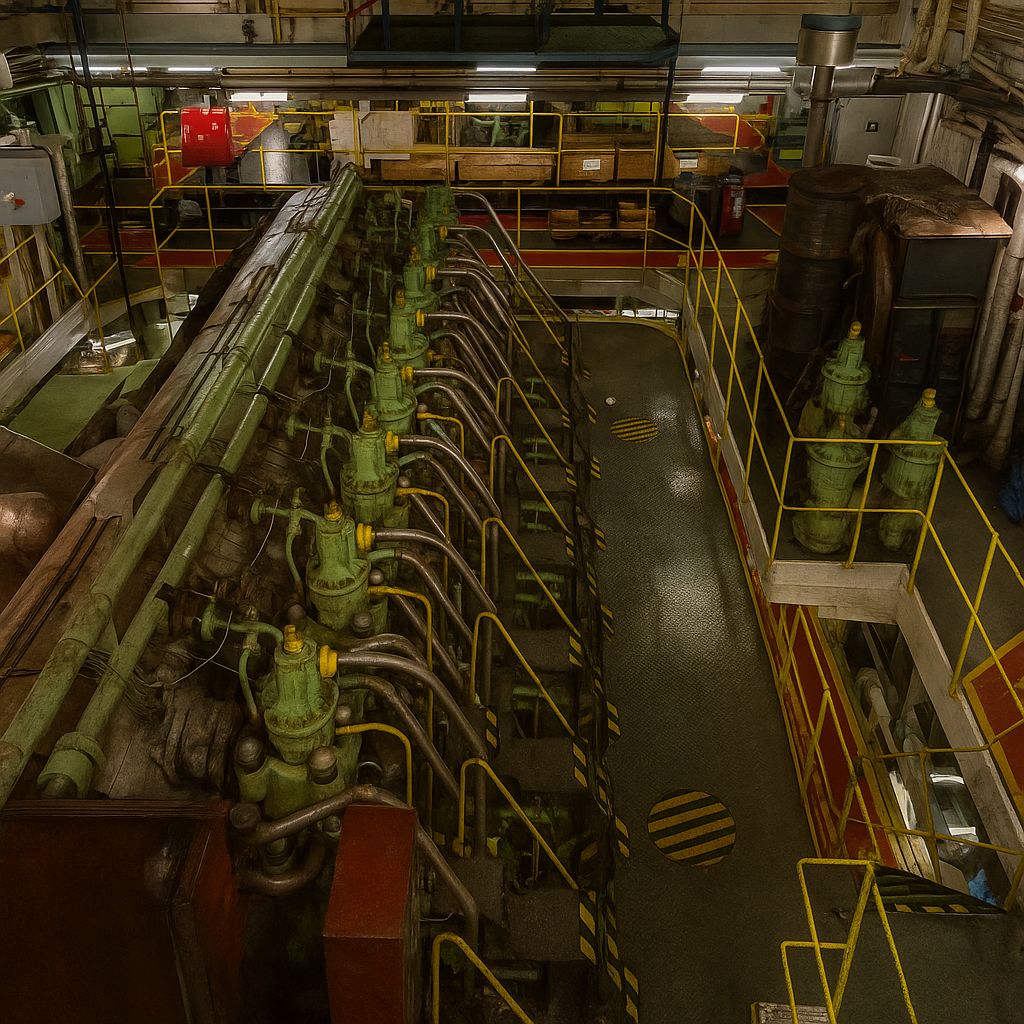
Marine Main Engine
The marine main engine is the heart of a ship’s propulsion system. It is the largest and most powerful machine on board, designed to convert fuel into mechanical energy that turns the propeller and drives the vessel forward. Without it, modern shipping—responsible for carrying around 90% of the world’s trade—would not be possible. Understanding the main engine is essential for students, seafarers, and anyone interested in marine engineering.
Meaning and Purpose
The main engine refers to the primary source of propulsion power in a ship. Its purpose is straightforward yet vital: to provide continuous, reliable thrust to move the vessel safely across oceans. Unlike auxiliary engines, which generate electrical power for onboard systems, the main engine directly powers the propeller shaft. This distinction highlights its role as the core machinery that ensures a ship’s mobility and operational efficiency.
Background
Marine engines have evolved significantly since the early days of steam propulsion. In the 19th century, ships relied on coal-fired steam engines. Over time, these were replaced by more efficient internal combustion engines. Today, the most common propulsion system in large commercial vessels is the two-stroke low-speed diesel engine, valued for its efficiency, durability, and ability to burn heavy fuel oil. However, with increasing environmental regulations, new technologies and alternative fuels are reshaping the future of marine propulsion.
Types of Marine Main Engines
Marine main engines can be classified in several ways:
Two-Stroke Engines – Predominantly used in large ocean-going ships. They operate at low speeds (60–120 rpm) and are directly connected to the propeller shaft without the need for reduction gears. Their design allows high thermal efficiency and reliability.
Four-Stroke Engines – Commonly used in smaller vessels such as ferries, tugs, and naval ships. They run at higher speeds, often requiring gearboxes to connect with the propeller shaft.
Diesel Engines(Conventional) – The most widely used type, burning heavy fuel oil or marine diesel oil.
Dual-Fuel Engines – Engines capable of running on both traditional fuels and liquefied natural gas (LNG), offering flexibility and compliance with stricter emission standards.
Gas Turbines & Hybrid Systems – Less common but increasingly relevant for specialized vessels and future-ready ships. They provide high power output with reduced emissions but are more expensive to operate.

ADVERTISMENT
Key Components and Operation
A marine main engine is a highly complex system consisting of cylinders, pistons, crankshaft, fuel injection system, exhaust system, and cooling arrangements. Fuel is injected into the combustion chamber, ignited under high pressure, and the resulting energy moves the pistons. This reciprocating motion is converted into rotary motion by the crankshaft, which ultimately drives the propeller.
Importance
The marine main engine is central not only to ship operation but also to global trade. Its reliability ensures that goods, energy, and passengers reach their destinations safely and on time. As the shipping industry transitions toward sustainability, main engines are being redesigned to work with alternative fuels like methanol, ammonia, and hydrogen. Additionally, digital monitoring systems now track performance, fuel consumption, and emissions, helping optimize efficiency.
Summary Of The Topic
The marine main engine is more than just machinery—it is the powerhouse that keeps international shipping moving. With advancements in design, alternative fuels, and greener technologies, the role of the main engine is evolving, making it a fascinating subject for anyone studying marine engineering or working in the maritime industry.
